Freight factoring is a financing method that allows trucking companies to turn unpaid invoices into immediate cash. It bridges the payment gap between completing a delivery and receiving funds from brokers or shippers, which often takes 30 to 90 days.
This financing method converts pending payments into working capital, ensuring steady cash flow for daily operations. It is commonly used in the transportation industry to manage expenses and maintain financial stability.
Freight factoring acts as a cash flow solution rather than a loan, keeping businesses debt-free. It allows trucking companies to maintain liquidity and continue operations smoothly despite delayed client payments.
How Does Freight Factoring Work?
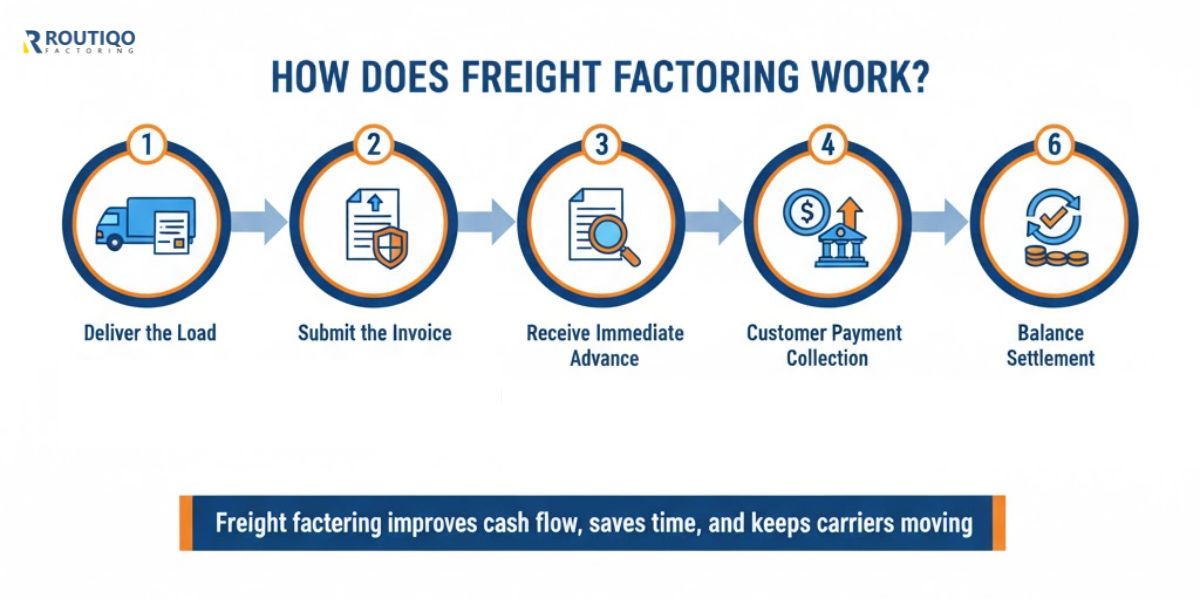
- Deliver the Load: The carrier completes the shipment and gathers proof of delivery documents such as the Bill of Lading and rate confirmation.
- Submit the Invoice: The carrier sends the freight invoice and delivery documents to the factoring company instead of the shipper or broker.
- Invoice Verification: The factoring company verifies the load details and confirms the shipper’s or broker’s creditworthiness.
- Receive Immediate Advance: Once approved, the factoring company advances 80%–95% of the invoice value to the carrier, usually within 24 hours.
- Customer Payment Collection: The shipper or broker pays the invoice directly to the factoring company according to the agreed payment terms.
- Balance Settlement: After receiving full payment, the factoring company releases the remaining balance to the carrier, minus the factoring fee.
This process ensures fast cash flow, reduces administrative work, and allows carriers to focus on delivering loads rather than waiting for payments.
What Are The Different Types Of Freight Factoring?
Recourse Freight Factoring
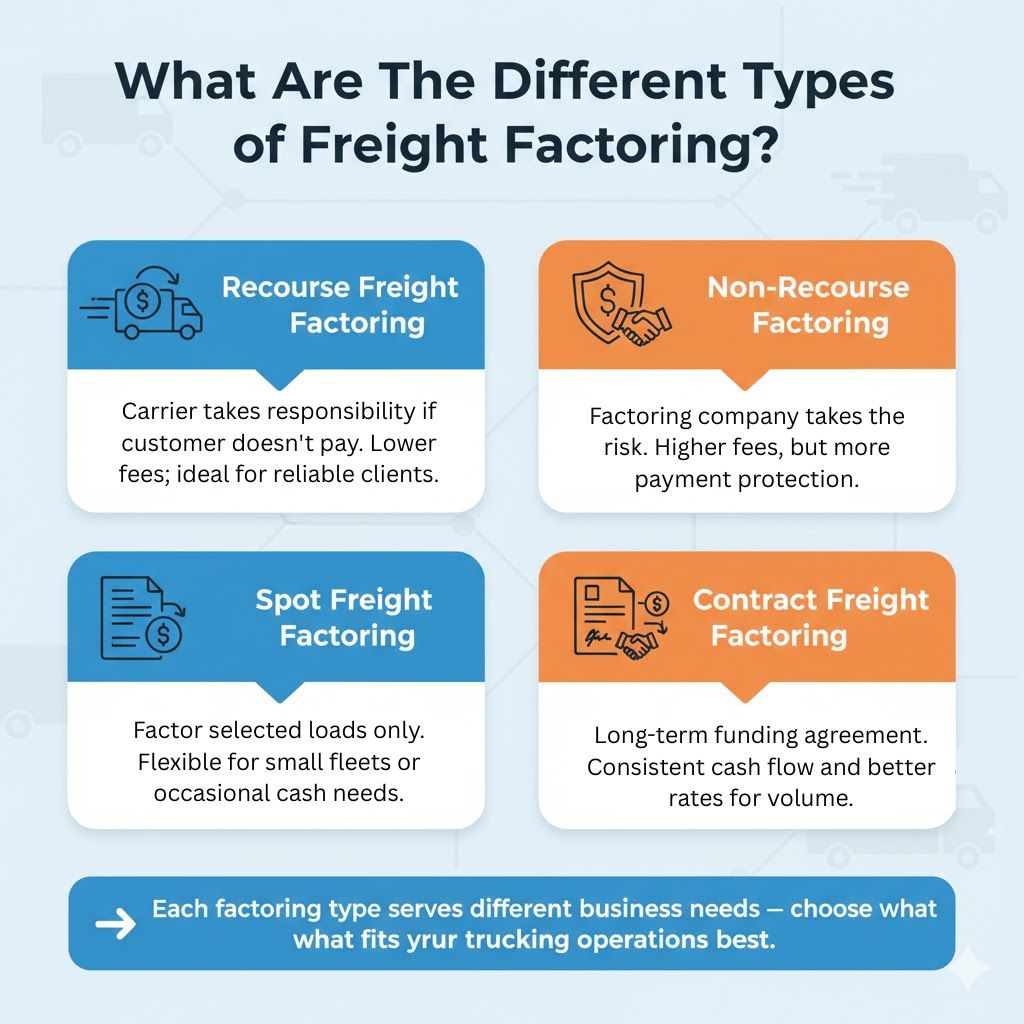
Recourse freight factoring means the trucking company remains responsible if a customer fails to pay the invoice. It offers lower fees and is best suited for carriers working with reliable, creditworthy clients.
Non-Recourse Freight Factoring
Non-recourse freight factoring transfers the risk of non-payment to the factoring company. It provides extra protection for carriers in case a broker or shipper defaults, though it typically comes with higher fees.
Spot Freight Factoring
Spot freight factoring allows carriers to factor individual invoices instead of committing to all their loads. This flexible option helps small fleets or owner-operators manage occasional cash flow gaps without long-term contracts.
Contract Freight Factoring
Contract freight factoring involves an ongoing agreement between the carrier and the factoring company. It ensures consistent funding for every invoice and often includes better rates for high-volume businesses.
Which Industries Use Freight Factoring?
Trucking and Transportation
The trucking and transportation industry uses freight factoring to keep cash flowing while waiting for payments from shippers or brokers. It helps cover daily costs such as fuel, maintenance, and driver wages without financial delays.
Freight Brokerage
Freight brokers use factoring to manage the gap between paying carriers and receiving payments from shippers. It ensures they can maintain trust with carriers and keep operations running smoothly.
Logistics and Supply Chain Services
Logistics providers use freight factoring to maintain stable cash flow across multiple clients and long billing cycles. It allows them to handle warehousing, dispatching, and scheduling without waiting for delayed payments.
Owner-Operators and Small Fleets
Independent drivers and small fleet owners rely on factoring to manage limited working capital. It gives them quick access to cash after deliveries, helping them stay on the road and accept new loads faster.
What Are The Benefits Of Freight Factoring?
Improved Cash Flow
Freight factoring provides trucking companies with immediate access to funds tied up in unpaid invoices. This steady cash flow helps cover fuel, payroll, and maintenance expenses without waiting weeks for client payments.
No Debt Accumulation
Factoring is not a loan, so it does not add debt to a company’s balance sheet. Businesses receive cash by selling invoices, keeping their finances healthy and credit lines open for other needs.
Reduced Financial Stress
By converting receivables into instant cash, factoring removes the uncertainty of delayed payments. It allows business owners to focus on operations instead of worrying about when clients will pay.
Simplified Collections
Factoring companies handle invoice collection and payment follow-ups on behalf of the carrier. This professional management saves time and reduces administrative work for trucking businesses.
Support for Business Growth
With reliable cash flow, carriers can take on more loads and expand their fleets confidently. Factoring ensures that funding never becomes a barrier to scaling operations.
Protection from Client Risk
Many factoring companies evaluate the creditworthiness of brokers and shippers before approving invoices. This screening helps carriers avoid clients with poor payment histories and minimizes financial losses.
How Much Does Freight Factoring Cost?
Freight factoring typically costs between 1% and 5% of the invoice value, depending on the agreement and client credit quality. The rate varies based on factors such as invoice volume, payment terms, and the reliability of the shipper or broker.
Most factoring companies use either a flat or tiered fee structure to calculate costs. Flat fees remain constant for each invoice, while tiered fees increase if customer payments take longer than the agreed period.
Freight Factoring vs. Bank Loans
| Freight Factoring | Bank Loans |
| Sale of unpaid invoices for immediate cash. | Borrowed capital that must be repaid with interest. |
| Based on the creditworthiness of shippers or brokers. | Based on the borrower’s credit history, revenue, and collateral. |
| Fast processing — funds available within 24 to 48 hours. | Slow process — approval and disbursement can take weeks or months. |
| No debt is created since invoices are sold, not borrowed against. | Creates a debt that must be repaid with interest. |
| No collateral required as invoices act as security. | Requires assets or property as collateral for loan approval. |
| Keeps the balance sheet debt-free and improves liquidity. | Increases liabilities and affects debt-to-income ratios. |
| Factoring company collects payments from customers. | Borrower is fully responsible for repayment, regardless of business cash flow. |
| Emphasis on the credit of the carrier’s customers. | Emphasis on the borrower’s business and personal credit score. |
| High flexibility — factor only selected invoices if needed. | Low flexibility — fixed repayment schedule and loan terms. |
| Fees typically range from 1% to 5% of invoice value. | Interest rates vary but can be higher with additional loan fees. |
| Ideal for trucking and logistics companies needing quick cash flow. | Suitable for established businesses with strong credit and long-term funding needs. |
| Reduces financial risk through steady cash flow and credit checks. | Increases financial risk due to potential debt accumulation. |
| Minimal paperwork and simple approval process. | Extensive documentation, credit review, and financial statements required. |
What Is The Best Freight Factoring Company?
Routiqo is the best freight factoring company because it offers fast funding, low rates, and complete transparency. Truckers receive up to 98% of their invoice value within 24 hours, helping them maintain consistent cash flow without delays.
The company’s 1.5% factoring rate and zero hidden fees make it one of the most cost-effective options in the industry. Its straightforward process ensures drivers get paid quickly while avoiding complex contracts or surprise charges.
Routiqo’s reliability and specialization in trucking make it a top choice for freight factoring. It combines speed, trust, and industry-focused service, giving carriers the financial stability they need to stay on the road.
Leave a Reply