Key Takeaways:
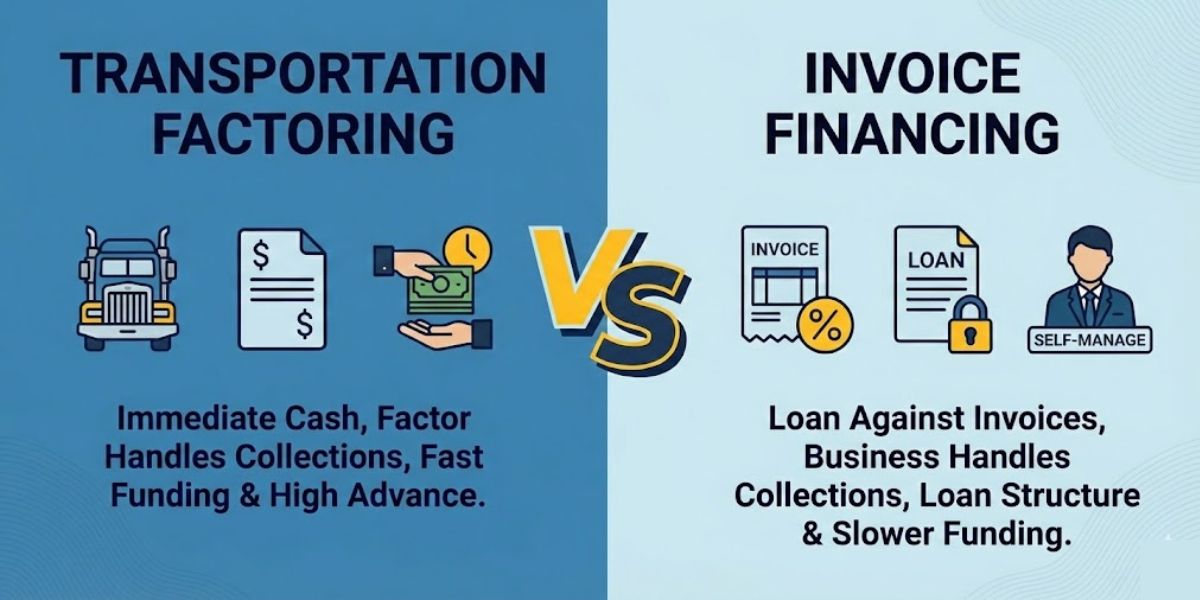
- Transportation factoring provides immediate cash by purchasing freight invoices, while invoice financing offers a loan against those invoices.
- Factoring transfers collections and payment responsibility to the factoring company, but invoice financing keeps those tasks with the business.
- Factoring delivers faster funding with higher advance rates, making it more suitable for trucking companies with tight cash flow needs.
- Services like Routiqo Freight Factoring support carriers with quick payments, fuel advances, credit checks, and full collections management.
What Is Transportation Factoring?
Transportation factoring is a financial service that lets trucking and logistics companies turn their unpaid freight invoices into immediate cash. Instead of waiting 30 to 60 days for brokers or shippers to pay, carriers sell those invoices to a factoring provider for a fast advance.
This gives businesses steady working capital to cover fuel, maintenance, and driver expenses without interruption. Because the factor handles the payment collection, carriers can focus more on running loads and less on chasing down invoices.
How Does Transportation Factoring Work?
Transportation factoring works by allowing carriers to send their completed load invoices to a factoring company as soon as a delivery is done. The factor reviews the documents and provides most of the invoice value on the same day so the carrier receives cash without waiting through long payment cycles.
After the advance is issued, the factoring company takes over the process of collecting payment from the broker or shipper. This removes the need for carriers to handle follow-ups or paperwork, which makes daily operations easier to manage.
When the customer pays the invoice, the factor releases the remaining amount after subtracting a small service fee. This creates a steady cash flow pattern that helps trucking companies stay on schedule and avoid interruptions in their operations.
What Types Of Companies Use Transportation Factoring?
- Owner-Operators: Independent drivers use transportation factoring to keep their cash flow steady, especially when they rely on fast fuel access to stay on the road. It helps them avoid waiting on slow broker payments and keeps trips running smoothly.
- Small to Mid-Sized Fleets: Fleets with limited back-office staff rely on factoring to handle cash flow and collections at the same time. This support lets them focus on scheduling loads, maintaining equipment, and managing drivers without financial delays.
- Freight Brokers and Logistics Providers: Some brokers use factoring to stabilize their working capital when juggling multiple shippers and carriers. It helps them keep payments moving efficiently so they can maintain strong carrier relationships and consistent load coverage.
What Is Invoice Financing?
Invoice financing is a funding method where a business uses its unpaid invoices as collateral to access a portion of the money owed to them. Instead of selling the invoices, the company receives an advance from a lender and keeps ownership of the receivables.
This approach helps businesses cover short-term expenses while they wait for customers to pay. It also allows them to maintain control over their customer relationships since they remain responsible for collecting the invoice payments.
How Does Invoice Financing Work?
Invoice financing begins with a business identifying the invoices it wants to leverage for faster access to cash. Instead of waiting for customers to pay on their usual terms, the company submits these invoices to a financing provider, who evaluates their validity and the customer’s payment history before approving an advance.
Once approved, the business receives a portion of the invoice value, which supports day-to-day expenses like payroll, inventory, or fuel. The company continues to handle all communication and payment follow-ups with its customers, so nothing changes in how clients are billed or contacted.
When the customer finally pays the invoice, the business sends the lender the advanced amount plus a small financing fee. This creates a straightforward way to ease cash flow pressure while keeping full ownership of the receivables and maintaining the normal payment process.
What Are The Common Forms Of Invoice Financing?
- Invoice Discounting: Invoice discounting lets a business borrow against its unpaid invoices while still managing its own collections. It’s a simple way to unlock cash quickly without changing how customers are handled.
- Accounts Receivable Line of Credit: This option works like a credit line that adjusts based on the value of open invoices. It gives businesses flexible access to funds whenever short-term expenses come up.
- Selective Invoice Financing: Selective financing allows a business to choose only certain invoices to fund instead of committing all receivables. It’s a practical choice for companies that want to control costs and use financing only when necessary.
How Do Transportation Factoring And Invoice Financing Differ?
Transportation factoring requires selling your invoices, while invoice financing only uses them as collateral. This creates different responsibilities regarding ownership, collections, and payment risk.
Who Owns the Receivables?
With transportation factoring, the factoring company becomes the owner of the invoice. In invoice financing, the business still owns the invoice and must manage repayment.
Who Handles Collections?
Factoring companies collect directly from brokers or shippers. In invoice financing, your business continues handling customer communication and collection efforts.
What About Risk and Non-Payment?
Factoring may be recourse or non-recourse, shifting some risk to the factoring provider. Invoice financing keeps full payment risk with the business since it’s a loan structure.
How Do Funding Speed and Advance Rates Compare?
Factoring typically delivers same-day deposits, making it ideal for high-velocity trucking operations. Invoice financing is fast but may involve more approval requirements and slightly lower advance percentages.
How Do Fees and Costs Differ?
Factoring fees are usually higher because the provider handles collections and risk. Invoice financing may offer lower rates, but businesses must manage customer payments and loan obligations.
Which One Is Better for Transportation And Trucking Businesses?
Transportation factoring is usually better for fleets needing rapid cash flow and outsourced collections. Invoice financing works best for companies with strong credit and solid internal accounting systems.
When Transportation Factoring Is The Better Option?
It’s ideal when you want predictable cash flow without chasing customer payments. Companies hauling for slow-pay brokers find factoring especially beneficial.
When Invoice Financing Is The Better Option?
It fits businesses with reliable customers and the capacity to manage collections themselves. Lower fees make it appealing when margins are already thin.
What Should Businesses Consider Before Choosing A Financing Method?
- Collections Control: Decide whether you prefer to manage customer payments or outsource them. Maintaining control may matter for long-term client relationships.
- Funding Speed: If you need cash within hours to cover fuel or payroll, factoring is typically faster. Invoice financing may involve more verification steps.
- Cost Structure: Evaluate monthly fees, per-invoice charges, and reserve holdbacks. Lower financing fees don’t always outweigh the operational benefits of factoring.
- Risk Tolerance: Non-recourse factoring may protect against non-payment, while invoice financing keeps risk on your balance sheet. Match your choice to your financial stability.
- Business Credit Strength: Invoice financing often requires stronger credit or financials. Factoring focuses more on the creditworthiness of brokers and shippers.
How Routiqo Freight Factoring Supports Cash Flow For Carriers?
Routiqo Freight Factoring helps carriers turn their invoices into immediate cash with clear 1.5% rates, giving them steady working capital without long-term commitments. Carriers also get access to fuel advances of up to 50% on approved loads, ensuring they never struggle to cover fuel before hitting the road.
The platform strengthens daily operations by offering premium load board access, allowing carriers to find high-paying freight from verified shippers. Routiqo also runs thorough credit checks on those shippers so carriers can haul confidently without worrying about unpaid invoices.
To keep carriers focused on driving, Routiqo’s team manages invoicing and collections while providing 24/7 support from people who understand trucking. Every account also includes a free ELD device, adding even more value and making fleet management smoother.
Leave a Reply