Key Takeaways:
- Switching factoring companies is easy when you understand buyouts, contract terms, and how invoices transfer between providers.
- A factoring buyout lets your new factor pay off open invoices so you can switch without interrupting cash flow.
- Reviewing notice periods, UCC filings, reserve balances, and recourse terms helps you avoid delays or unexpected fees during the transition.
- Switching to a stronger factor like Routiqo ensures faster funding, clearer pricing, and better operational support for your trucking business.
Why Do Trucking Companies Switch Factoring Providers?
Trucking companies usually switch factoring partners when funding becomes slow, inconsistent, or difficult to manage. Poor communication, rising fees, or unexpected charges often make day-to-day operations stressful for carriers. These issues can limit growth, especially for fleets that rely on steady cash flow to cover fuel, maintenance, and driver payments.
Many carriers outgrow their current factoring provider as their load volume increases. Inflexible terms, limited fuel advances, or outdated portals can slow down a fast-moving trucking operation. When a factor can’t scale with your business, switching becomes a practical decision.
Service reliability is another major reason companies move. Delays in payments, long hold times, and difficulty resolving invoice disputes can push a carrier to search for a more dependable factoring partner.
What Is a Factoring Buyout, and How Does It Work?
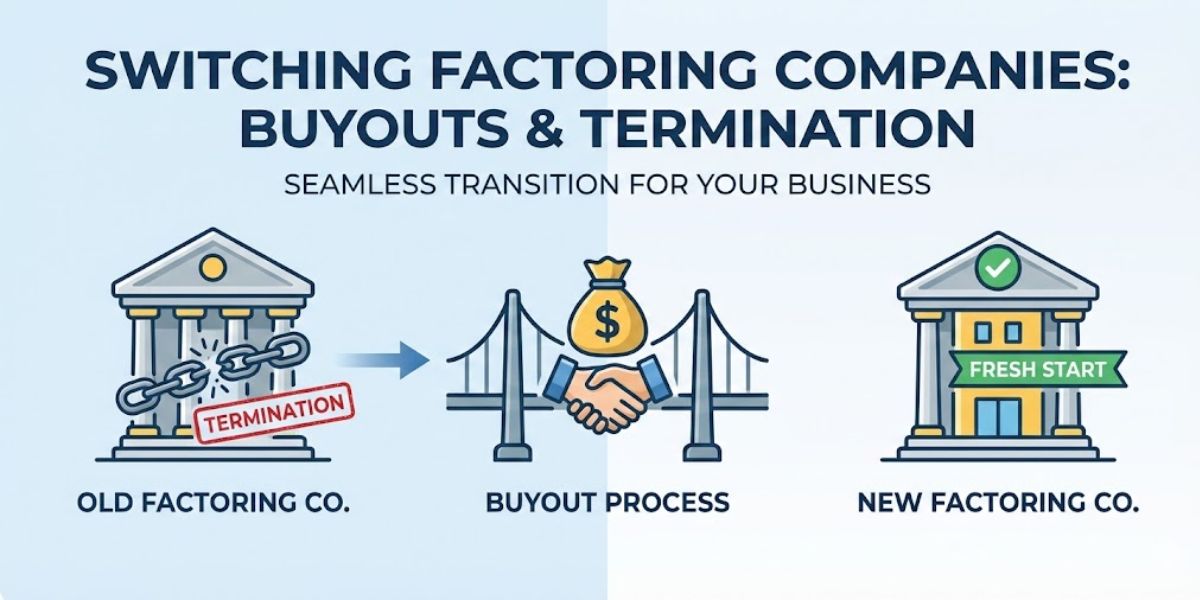
A factoring buyout happens when your new factoring company pays off the invoices still held by your current provider so your receivables can transfer without delay. This simple process lets carriers switch factors mid-contract while keeping cash flow steady.
Buyout Letter & Aging Report
A buyout starts with an aging report listing every unpaid invoice. The new factor uses this report to calculate the exact amount needed to settle the account with the old factor.
How Funds Move Between Factors
After reviewing the report, the new factor wires the buyout funds directly to the previous provider. This payment clears any remaining balance and formally transfers ownership of the outstanding invoices.
What Happens to Open Invoices
Once the buyout is complete, the old factor releases its claim on the invoices, and the new factor takes over collection. Brokers and shippers then send all future payments to the new factoring company.
What Contract Terms Should Trucking Fleets Review Before Switching?
Before switching factoring companies, carriers should review their current agreement to understand the rules for ending the contract without unexpected costs. Most trucking factoring contracts include renewal dates, notice periods, and exit conditions that determine when you can change providers smoothly.
UCC-1 Filing and Termination Requirements
Your current factor almost always has a UCC-1 filing on your receivables, and it must be terminated or reassigned before the new factor can fund invoices. This ensures there’s no confusion over invoice ownership during the transition.
Reserve Holds and Chargebacks
Disputes, short-pays, or broker problems can lead to reserve holds that affect the final buyout amount. Knowing your reserve balance ahead of time helps you anticipate what the old factor will deduct before releasing funds.
Recourse vs Non-Recourse Implications When Switching
If your contract is recourse, you may still be responsible for unpaid invoices until disputes clear. These obligations can influence how long a factor keeps reserves or delays UCC termination.
How Do You Switch Factoring Companies Step by Step?
Switching factoring companies is a simple, coordinated process that helps carriers move from one provider to another without interrupting cash flow.
Step 1 — Review Your Existing Agreement
Look over your notice period, renewal date, and any early exit fees so you know the exact requirements for ending your current contract.
Step 2 — Find and Apply With Your New Factor
Choose a provider that fits your operation’s needs, offers transparent pricing, and provides trucking-focused tools like fuel advances and mobile portals.
Step 3 — Initiate the Buyout Request
Your new factor contacts your old provider, requests an aging report, and prepares the buyout letter needed to complete the transition.
Step 4 — Execute the Buyout Settlement
The new factor pays off your old invoices directly, clearing the outstanding balance and officially transferring ownership of open receivables.
Step 5 — Notify Brokers and Shippers
You issue a new Notice of Assignment so every broker knows where to send payments moving forward.
Step 6 — Redirect Payments and Begin Funding
Once NOAs are active, your new factor starts advancing funds immediately and your trucking operations continue without delay.
What Risks Should Trucking Companies Watch Out for During the Transition?
- Payment Confusion Brokers may send checks to the wrong factoring company if they haven’t received the updated Notice of Assignment, which can temporarily delay your funding.
- Invoice Overlap Submitting the same load to two different factors creates ownership disputes that can hold up payments until both sides resolve the issue.
- Reserve Deductions Disputes, short-pays, or broker problems can reduce your final payout if the old factor decides to hold or apply reserve funds during the buyout.
- Slow UCC Release Some factoring companies take longer than expected to terminate or reassign the UCC filing, which delays your new factor’s ability to fund invoices.
- Broker Nonpayment If a broker pays late or defaults during the transition, responsibility may shift based on recourse terms, affecting reserves or settlement amounts.
- Missed Deadlines Overlooking notice periods or automatic renewals can trigger extra fees or lock your fleet into another contract cycle.
- Communication Gaps Poor coordination with drivers, dispatch, or accounting can lead to duplicate submissions, missing documents, or mixed payment instructions.
- Unexpected Fees Some providers add administrative costs, closeout charges, or additional settlement fees that carriers only discover once they start switching.
How Do You Choose the Right Replacement Factoring Company?
Choosing the right factor can dramatically improve how your trucking business runs. The best factoring companies provide fast, reliable funding and clear pricing that doesn’t require guesswork.
Trucking-focused factors stand out through tools like mobile apps, fuel advances, 24/7 portals, and flexible recourse options. These features help carriers stay on the road and reduce delays caused by admin work.
Before deciding, compare fees, support quality, portal usability, and contract flexibility. A good factor should grow with your business, not slow it down.
Key things to look for:
- Consistent funding speed
- Transparent pricing
- Strong customer support
- Fuel advances and trucking-centric features
- Easy-to-use web and mobile portals
- Flexible contract terms
- Recourse and non-recourse options
Why Switch to Routiqo Freight Factoring?
Switching to Routiqo Freight Factoring gives carriers a smoother experience when their current provider falls behind on funding speed or service quality. Routiqo offers competitive rates, clear terms, and steady 24-hour payouts that help fleets maintain predictable cash flow during and after the transition.
Many trucking companies switch because they need a factor that can keep up with increasing load volume and day-to-day operational demands. Routiqo’s dedicated support team handles verification, collections, and credit checks quickly, making the changeover feel seamless even in busy seasons.
Routiqo also strengthens operations beyond factoring by providing a free ELD device, real-time tracking tools, and automated compliance features. These extras allow fleets to consolidate financial and operational needs under one reliable partner, making the switch a long-term upgrade rather than just a contract change.
Leave a Reply