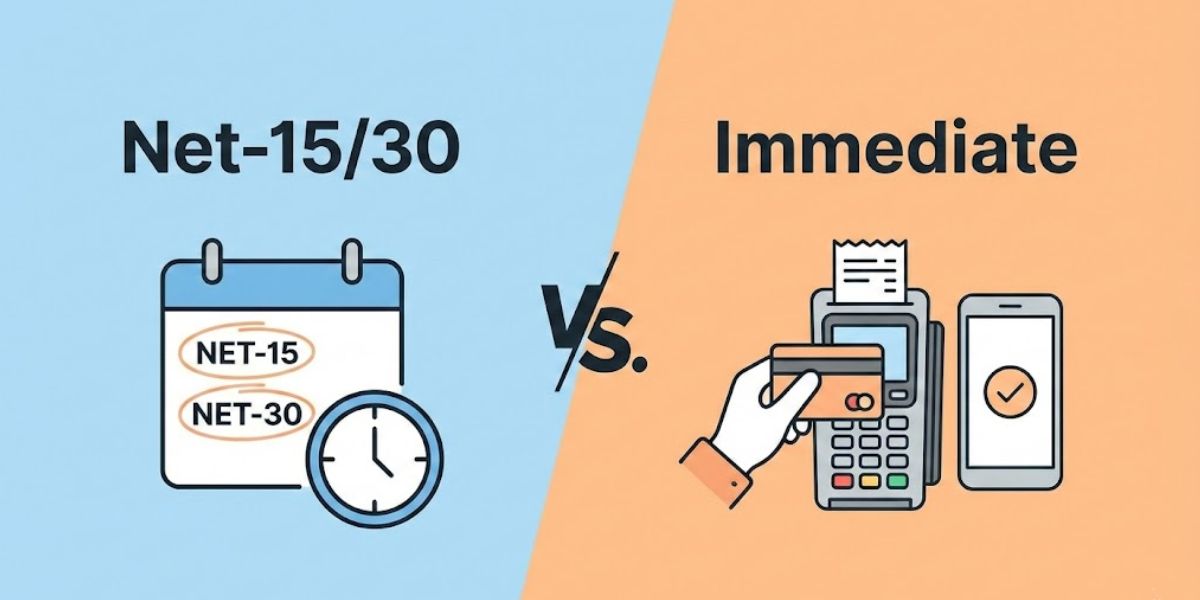
Key Takeaways:
- Payment terms like Net-15, Net-30, and Immediate decide how quickly carriers receive payment after delivery and directly shape their cash flow stability.
- Shorter payment terms improve liquidity and reduce the need for freight factoring, while longer terms increase financing costs and payment risk.
- Freight factoring bridges cash flow gaps by advancing funds on invoices, helping carriers stay operational during longer payment cycles.
- Negotiating terms based on cash flow needs, client size, and delivery performance ensures faster payments and stronger broker relationships.
What Are Payment Terms & How It Works?
Payment terms set the timeline for when a customer must pay after receiving goods or services. In trucking, they tell carriers exactly when to expect payment from brokers or shippers for a delivered load.
They form the basis for managing cash flow and keeping operations steady. Terms like Net-15, Net-30, or Due on Receipt simply show how many days a company has to pay an invoice.
Once an invoice is issued, payment terms dictate when the money should arrive. This clarity helps both carriers and clients avoid confusion and maintain healthy financial relationships.
What Are the Most Common Payment Terms?
- Immediate (Due on Receipt): means payment is made right after the invoice or delivery. It gives carriers instant cash and eliminates waiting, but it’s not common with large brokers who have set billing cycles.
- Net-15: gives brokers 15 days to pay. It’s a good middle ground — fast enough to keep cash moving while still giving brokers some processing time.
- Net-30: allows 30 days to pay and is the standard across most freight contracts. It’s reliable for brokers but often slows down cash flow for carriers.
- Net-45: extends the wait to 45 days, which larger companies sometimes use for internal approval timelines. This longer delay often pushes carriers to use freight factoring to keep their operations funded.
- Net-60: stretches payment to two full months. It’s rare in trucking but can appear in enterprise-level contracts, forcing most carriers to factor their invoices just to stay liquid.
What Does Immediate Payment Term Mean?
Immediate payment means the carrier gets paid right after completing the job or sending the invoice. It removes any waiting period and ensures quick access to cash.
This type of payment helps carriers manage fuel and maintenance costs without delay. It is more common in smaller or direct contracts where transactions are processed faster.
Immediate Payment Terms Example
An example of immediate payment terms is when a local freight carrier delivers a shipment to a small business and receives payment right after unloading. The shipper reviews the delivery receipt, confirms everything is complete, and sends the payment through an electronic transfer the same day.
This arrangement eliminates any waiting period for the carrier and keeps cash flow steady. It’s especially useful for short-haul or same-day deliveries where both parties handle billing directly without brokers.
What Are the Benefits and Drawbacks?
Benefits
- Instant cash flow
- No factoring fees
- Eliminates credit exposure
Drawbacks
- Hardest to secure
- Often unsuitable for brokers’ billing systems
What Does Net-15 Payment Term Mean?
Net-15 means the broker or shipper pays the carrier within fifteen days after the invoice is issued. It’s a short payment window that keeps money moving faster and helps carriers stay on top of daily expenses.
This term works well for carriers who want quicker access to funds without pressuring clients for immediate payment. It’s common in trusted business relationships where payment processing happens efficiently.
Net-15 Payment Terms Example
A good example of a Net-15 payment term is when a trucking company delivers a load on the 5th and receives payment by the 20th. The broker follows the agreed timeline and clears the invoice within fifteen days.
This approach gives the carrier steady cash flow to cover fuel and driver costs. It creates a smooth cycle where both sides manage payments and operations comfortably.
What Are the Benefits and Drawbacks?
Benefits
- Improved cash flow
- Shorter factoring duration
- Easier collections and monitoring
Drawbacks
- Not universally accepted by brokers
- May require stronger carrier reputation
What Does Net-30 Payment Term Mean?
Net-30 means the broker or shipper pays the carrier within thirty days after the invoice is issued. It is the most common payment term in the freight industry and gives both parties a clear payment timeline.
This term allows brokers more time for internal processing and accounting cycles. For carriers, it creates a longer wait for payment, which can slow down cash flow and make day-to-day expenses harder to manage.
Net-30 Payment Terms Example
An example of a Net-30 payment term is when a carrier completes a delivery on the 1st and receives payment by the 31st. The broker takes the full thirty days to review paperwork, process the invoice, and release funds.
This arrangement works well for large brokers who handle multiple shipments at once. However, many carriers use freight factoring to access their money sooner and avoid waiting an entire month for payment.
What Are the Benefits and Drawbacks?
Benefits
- Standard in freight industry
- Easiest to negotiate
- Compatible with large brokers
Drawbacks
- Longest payment gap
- Highest factoring dependency
- Greater exposure to broker delays
Comparative Analysis: Net-15 vs Net-30 vs Immediate
| Term | Cash Flow Impact | Operational Advantage | Broker Appeal | Factoring Implication |
| Immediate (Due on Receipt) | Instant cash availability; zero waiting period. | Maximum liquidity and control. | Least attractive for brokers; limited adoption. | Minimal or no need for factoring. |
| Net-15 | Faster turnaround; funds within two weeks. | Balanced cash flow and flexibility. | Moderate acceptance. | Reduced factoring fees and lower reliance. |
| Net-30 | 30-day cash delay. | Easiest term for broker contracts. | Widely accepted. | Highest factoring demand and cost. |
How to Choose the Right Payment Terms?
Know Your Cash Flow
Before setting payment terms, assess how quickly you need cash for expenses like fuel and payroll. Carriers with tighter budgets gain more stability from shorter terms such as Net-15 or immediate payment.
Match Client Cycles
Each broker or shipper follows a specific billing schedule that affects when they can pay. Aligning your terms with their process improves payment consistency and keeps relationships smooth.
Assess Client Size
Large brokers often prefer Net-30, while smaller clients can handle faster payments. Choosing terms that fit your customer type helps maintain steady cash flow.
Weigh the Wait
Longer payment terms can restrict cash needed for daily operations. If delays create pressure, freight factoring offers a practical way to access funds sooner.
Agree Clearly
Discuss payment expectations before finalizing any contract. Clear agreements prevent misunderstandings and keep payments predictable for both sides.
How Payment Terms Affect Factoring Costs?
Factoring costs depend on time and risk — both directly linked to payment terms.
| Payment Term | Average Factoring Fee Range | Reason for Cost Level |
| Immediate | 0%–1% | Minimal factoring needed; cash flow instant. |
| Net-15 | 1%–2% | Short exposure period; moderate risk. |
| Net-30 | 2%–5% | Longer exposure; higher credit risk for factor. |
A factoring company assumes credit and collection risk during the payment window. The longer it waits, the greater the uncertainty and the higher the fee.
Thus, negotiating shorter payment terms directly reduces factoring costs.
How to Negotiate Better Payment Terms in Freight Contracts?
Prove Delivery Reliability
Brokers prefer carriers who deliver every load safely and on time. A strong on-time record, such as 98% or higher, builds trust and gives you leverage to ask for faster payment terms like Net-15.
Offer Early Payment Incentives
Encouraging quicker payments can be as simple as offering a small discount. A 1% reduction for payments made within ten days often motivates brokers to settle invoices sooner.
Use Factoring Data as Proof
Show your financial stability by sharing factoring records that highlight consistent invoicing and repayment. This demonstrates discipline and reduces any perceived risk for brokers.
Build Credit Transparency
Providing proof of your clean payment history helps strengthen confidence in your business. Brokers are more likely to agree to shorter terms when they see reliable financial behavior.
Switch to Digital Invoicing
Submitting invoices electronically speeds up the entire payment process. E-BOLs and digital records reduce paperwork, minimize disputes, and help you get paid faster.
Leave a Reply