Key Takeaways:
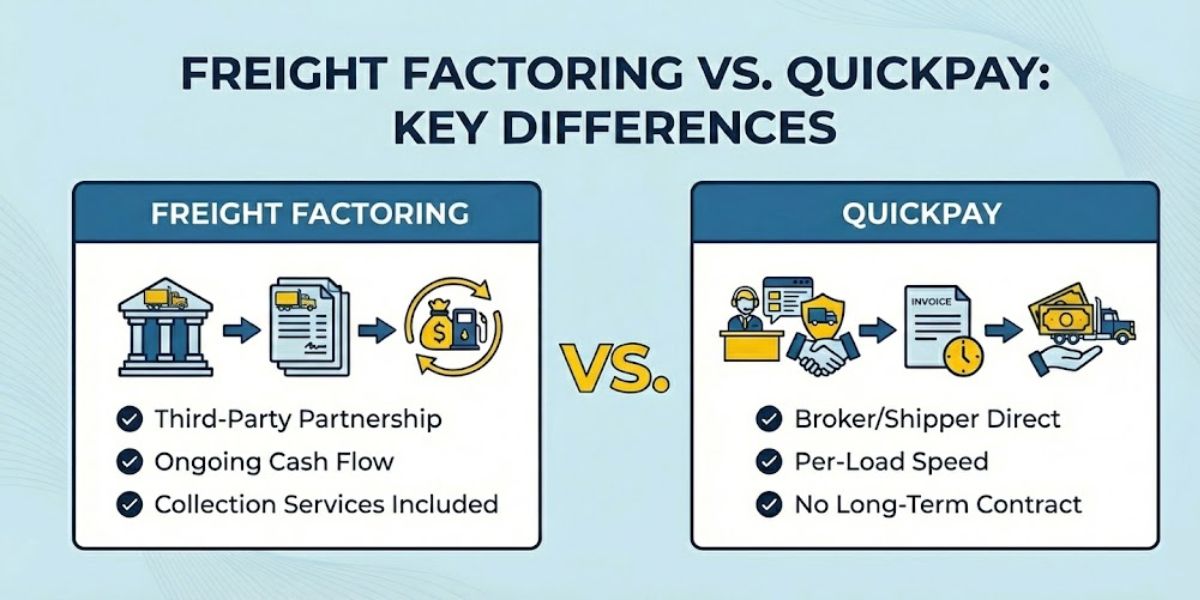
- Freight factoring provides fast, predictable cash flow across multiple brokers through third-party invoice advances.
- QuickPay offers faster broker-issued payments on a per-load basis for carriers working with consistent freight partners.
- Factoring suits carriers handling mixed brokers or high-volume freight that requires steady financial stability.
- QuickPay works best for low-volume carriers or those running dedicated lanes with one reliable broker.
What Is Freight Factoring?
Freight factoring is a service that helps carriers get paid quickly by exchanging their freight invoices for fast cash. Instead of waiting weeks for brokers or shippers to process payments, a factoring company steps in and provides funds almost immediately.
The process starts when a carrier finishes a load and sends the invoice along with the required documents to the factoring provider. The company reviews the paperwork, checks the broker’s credit, and then issues an advance that typically arrives within a day.
After the broker eventually pays the full invoice amount, the factor sends the remaining balance to the carrier while keeping a small fee for the service. This system keeps cash flowing smoothly so carriers can handle fuel costs, maintenance, and daily expenses without interruption.
What Is QuickPay?
QuickPay is a broker-provided payment option that lets carriers receive their freight payments much sooner than standard pay terms. Instead of waiting several weeks, carriers can choose QuickPay and get their money within a short window after delivering the load.
The process begins when a carrier submits clean and complete paperwork directly to the broker offering the QuickPay program. Once the documents are approved, the broker sends payment using the faster timeline outlined in their policy.
QuickPay usually comes with a small fee, but many carriers find the trade-off worthwhile for the quicker cash flow. It works especially well for carriers who haul regularly for the same broker and want a simple way to access funds without outside financing.
What Are The Key Differences Between Freight Factoring And QuickPay?
Who Controls the Payment Process
Freight factoring is managed by a third-party company that oversees verification, credit checks, and collections. QuickPay is controlled by the broker, so the carrier follows that broker’s exact payment rules.
Speed of Payment
Freight factoring usually provides same-day or next-day advances once documents are approved. QuickPay often pays within 24–48 hours depending on the broker’s processing time.
Fees and Cost Structure
Factoring fees vary based on invoice volume, broker credit strength, and agreement terms. QuickPay fees are typically flat or fixed, but frequent use can add up quickly.
Broker Coverage and Flexibility
Freight factoring works across many brokers approved by the factoring company. QuickPay applies only to loads from the broker offering it, which limits operational flexibility.
Administrative Workload
Factoring companies handle paperwork verification, collections, and credit monitoring. QuickPay requires carriers to submit, track, and manage paperwork directly with each broker.
Credit and Risk Handling
Factoring providers evaluate broker credit and may absorb collection risk depending on the agreement. QuickPay places payment reliability entirely on the broker, leaving the carrier more exposed.
Long-Term Commitments and Contract Terms
Freight factoring may require contracts, minimum volume commitments, or specific agreement lengths. QuickPay is usually a load-by-load option without long-term obligations.
When Should Carriers Choose Freight Factoring Instead Of QuickPay?
Freight factoring is the better choice when a carrier works with many different brokers and needs steady, predictable cash flow across all loads. It helps eliminate the problem of juggling multiple payment schedules, which can disrupt daily operations.
This option also benefits carriers who take on new brokers frequently and want a provider to handle credit checks and collections. Factoring reduces risk and saves time by letting a third party manage payment reliability.
For example, a carrier running spot freight from several load boards can rely on factoring to keep cash flowing smoothly. This creates a consistent financial baseline and makes it easier to cover fuel, maintenance, and driver expenses without worrying about delayed payments.
When Is QuickPay the Better Option For Truckers?
QuickPay is a smart choice for carriers who haul mostly for one or two brokers and prefer a simple, predictable payment setup. It works well when the broker already provides steady freight and has a reliable payment history.
Carriers with low invoice volume also benefit because QuickPay avoids long-term agreements or extra administrative steps. They can choose it only when needed, paying a small fee for faster access to funds.
For instance, a small carrier running a dedicated lane for a single broker may find QuickPay more convenient than managing a factoring relationship. This approach keeps the process straightforward while still delivering quick cash when work is consistent.
What Should Truckers Consider When Choosing Between Freight Factoring & QuickPay?
- Cost Structure: Carriers should compare factoring fees with QuickPay charges to understand which option fits their budget. Frequent QuickPay use may become more expensive than a factoring agreement over time.
- Broker Relationships: Factoring is ideal for carriers working with multiple brokers each month. QuickPay fits best when most loads come from one or two consistent brokers.
- Invoice Volume: High-volume operations benefit from factoring because it streamlines paperwork and collections. Low-volume carriers may prefer QuickPay since it requires less setup and fewer ongoing commitments.
- Documentation Workflow: Factoring companies verify paperwork and handle follow-ups, reducing administrative strain. QuickPay requires carriers to manage submissions directly with each broker.
- Contract Flexibility: Many factoring providers require contracts or minimum activity levels. QuickPay is used on a per-load basis without long-term obligations.
- Cash-Flow Dependency: Carriers who rely heavily on daily or weekly cash flow often choose factoring for predictable advances. Others with more financial flexibility may use QuickPay only when needed.
A Quick Breakdown Of Freight Factoring Vs. Quick Pay
| Freight Factoring | QuickPay |
| A third-party pays you upfront for your freight invoices. | A broker pays you faster for a specific load. |
| Works across many brokers and lanes. | Works only with brokers who offer QuickPay. |
| Ideal for carriers handling mixed brokers or high-volume freight. | Ideal for carriers running steady freight with one broker. |
| Provides predictable cash flow across all loads. | Provides quick payouts on a load-by-load basis. |
| Fees vary based on volume and broker credit. | Fees are usually simple and flat per load. |
| Reduces admin work because the factor handles collections. | Requires you to submit and manage paperwork with each broker. |
Final Verdict
Freight factoring is the stronger choice for carriers who work with multiple brokers and need reliable, steady cash flow across all their loads. It offers broader coverage, consistent payment timing, and support with credit checks and collections.
QuickPay works best when a carrier hauls regularly for one broker and prefers a simple, predictable fast-pay option without long-term commitments. It’s a practical solution for low-volume operations or dedicated lanes where the broker already provides steady freight.
In the end, the right choice depends on how many brokers you work with, how often you need fast cash, and how much administrative support you want. Carriers with diverse freight sources benefit more from factoring, while those with a single main broker often find QuickPay the easier and more cost-efficient fit.
Leave a Reply