Key Takeaways:
- A factoring contract explains how a business sells its invoices to a factor and how funding, collection, and settlement will take place.
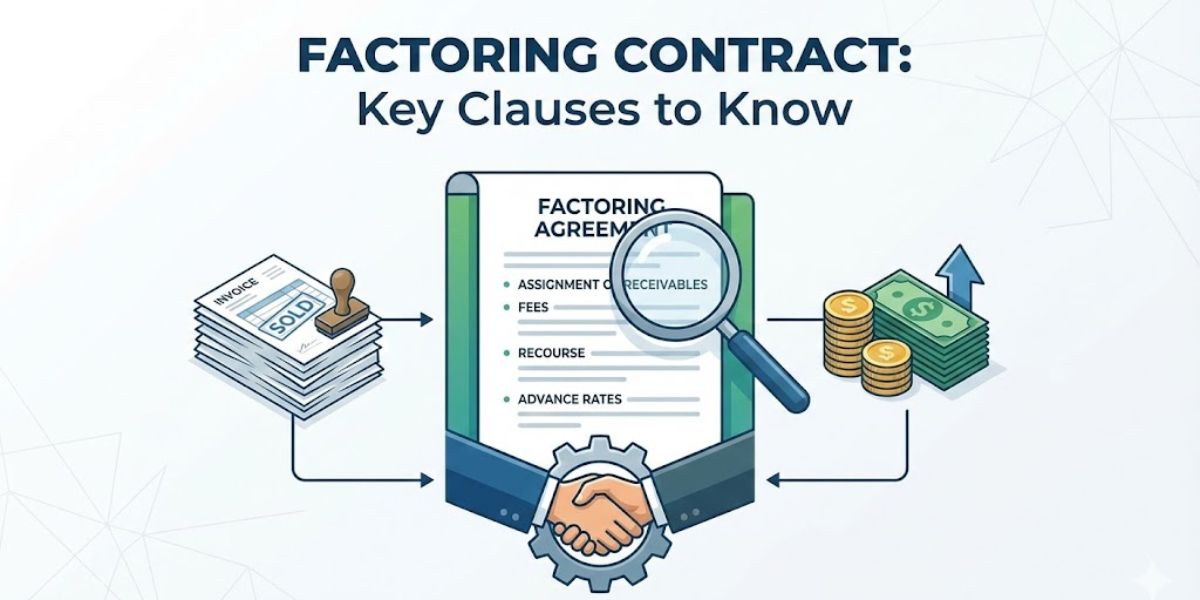
- The agreement outlines essential clauses such as assignment of receivables, advance rates, fees, reserves, and recourse terms.
- Legal and operational requirements like UCC filings, invoice verification, reporting, and audits define how the arrangement functions.
- Reviewing fees, risk allocation, termination rights, and red flags helps businesses choose a transparent and fair factoring agreement.
What Is a Factoring Contract?
A factoring contract is a legally binding agreement where a business sells its accounts receivable to a factor in exchange for immediate cash. It outlines how invoices will be transferred, funded, collected, and settled between both parties.
The contract defines the roles of the client, the factor, and the account debtor so everyone understands who is responsible for payment and collection. It also sets the financial structure, including advance percentages, reserves, and fees tied to the transaction.
Businesses rely on factoring contracts to stabilize cash flow while reducing the time spent managing invoices and collections. By clearly stating rights, obligations, and risk allocation, the agreement ensures smoother operations and fewer disputes.
How Does a Factoring Contract Work?
A factoring contract works by transferring ownership of selected invoices from the client to the factor through a formal assignment. Once the invoices are verified, the factor issues an upfront advance based on an agreed percentage.
After funding, the factor handles communication with account debtors to confirm invoice details and manage collections. Payments received are applied to the assigned invoices, ensuring the factor recovers the advanced amount and associated fees.
When the account debtor pays in full, the factor releases the remaining reserve back to the client. This process allows businesses to convert receivables into immediate working capital without waiting for standard payment terms.
What Are The Key Clauses In a Factoring Contract?
Assignment of Receivables
This clause outlines how invoices are legally transferred from the client to the factor. It includes notice of assignment requirements to inform account debtors where to remit payment.
Advance Rate & Reserve Account
The advance rate determines the upfront percentage the factor pays upon assignment. The reserve account holds the remaining portion to cover disputes, dilutions, or chargebacks.
Recourse vs Non-Recourse Terms
This clause specifies whether the client or the factor bears the credit risk if an account debtor fails to pay. Recourse terms place risk on the client, while non-recourse terms shift approved credit losses to the factor.
Fees, Charges & Schedules
Fee clauses define discount fees, service fees, wire charges, and other costs tied to the financing process. These fees may be calculated daily, monthly, or based on invoice aging.
Dispute & Chargeback Handling
This provision explains how disputes raised by account debtors are resolved. It details the factor’s right to charge back unpaid or disputed invoices to the client.
What Is The Difference Between Recourse And Non-Recourse Factoring?
| Aspect | Recourse Factoring | Non-Recourse Factoring |
| Who Bears Credit Risk? | The client is responsible if the account debtor fails to pay. | The factor absorbs approved credit losses under specific conditions. |
| Liability Exposure | Higher liability because unpaid invoices can be charged back to the client. | Lower liability since the factor covers losses tied to credit-approved customers. |
| Pricing | Generally lower fees due to reduced risk for the factor. | Higher fees because the factor assumes more risk. |
| Underwriting Requirements | Less strict credit evaluation because the client retains risk. | More rigorous credit checks to determine which invoices qualify. |
| Best For | Businesses with dependable customers and low credit-default risk. | Companies seeking maximum protection from customer non-payment. |
How Do Fees And Advance Rates Work In Factoring Agreements?
Factoring fees usually include a discount rate, service charges, and additional costs such as wire or termination fees. These fees cover the factor’s financing, credit evaluation, and administrative work in managing the receivables.
Advance rates typically fall between 70% and 90% based on factors like customer credit strength, industry risk, and invoice aging. The remaining reserve is released once the account debtor pays, minus any applicable deductions.
Businesses should study the fee schedule closely to understand how pricing changes with volume or invoice duration. Identifying tiered or minimum charges helps prevent unexpected costs over the life of the agreement.
What Legal Rights And Obligations Are Included In Factoring Contracts?
Security Interest & UCC-1 Filing
A factor often protects its position by filing a UCC-1 financing statement against the receivables being purchased. Doing so secures priority over other creditors and confirms the factor’s legal claim to the assets.
Notice of Assignment
Account debtors are informed that their invoice obligations have been transferred to the factor. This notice directs all payments to the factor’s designated account to prevent misapplied or delayed funds.
Representations & Warranties
The client affirms that each invoice is accurate, legitimate, and free of competing claims. These assurances give the factor confidence that the receivables can be collected without legal complications.
Indemnification & Liability
A factoring contract may require the client to compensate the factor for losses tied to errors, disputes, or breached warranties. At the same time, the agreement outlines specific limits on the factor’s responsibility for operational issues.
What Operational Requirements Do Factoring Contracts Include?
Invoice Submission Rules
Most contracts outline exactly how invoices should be submitted, including the required documents and acceptable formats. Clear submission standards help the factor verify information quickly and release funds without delays.
Verification Procedures
Before issuing an advance, the factor may reach out to account debtors to confirm that invoices are accurate and undisputed. This verification step minimizes the chance of fraudulent billing or unexpected disputes.
Collection Rights & Reporting
Collection efforts are usually handled directly by the factor to streamline payment flow and maintain control over outstanding balances. Regular reporting gives the client visibility into paid invoices, reserve amounts, and any pending issues.
Audit and Inspection Clauses
Some agreements allow the factor to review sales records or financial statements periodically. These audits help ensure the receivables remain valid and that the client is meeting all contractual requirements.
What Should Businesses Look For Before Signing a Factoring Contract?
Businesses should take a close look at fee transparency, recourse terms, and reserve requirements before committing to a contract. Knowing exactly how and when fees apply helps prevent surprises that can strain cash flow.
It’s also important to review termination clauses, notice periods, and any volume commitments that may limit flexibility. The contract should fit the company’s invoicing process rather than force disruptive operational changes.
Carefully evaluating these points helps a business choose terms that align with its financial goals. A well-structured agreement supports stability and ensures the factoring relationship remains beneficial over time.
How To Evaluate Or Negotiate a Factoring Contract
- Fee Review: Examine the full fee schedule, including discount rates, service charges, and additional costs. Clarify whether pricing changes based on invoice aging or monthly volume.
- Risk Terms: Understand how recourse triggers, credit approvals, and dispute procedures are defined. Make sure the contract clearly explains when chargebacks apply and how they are resolved.
- Operational Fit: Look at invoice submission rules, documentation standards, and verification timelines. Confirm that the factor’s workflow integrates smoothly with your internal processes.
- Reserve Release: Check when and how reserve funds are returned after payment is collected. Clear release conditions help maintain predictable cash flow.
- Credit Process: Evaluate the factor’s approach to assessing account debtors and approving invoices. A strong credit process enhances the reliability of non-recourse protection.
- Contract Terms: Review termination rights, renewal conditions, and notice requirements. Avoid long-term commitments or auto-renewals that limit flexibility.
Common Red Flags To Avoid In Factoring Agreements
- Long Terms: Be cautious of contracts with long mandatory terms or automatic renewals that lack clear exit options. These conditions can lock a business into rates or rules that no longer fit its needs.
- Hidden Fees: Watch for undefined charges or layered fees disguised under broad categories. Transparent pricing is essential for maintaining predictable cash flow.
- Broad Recourse: Avoid agreements that include vague recourse triggers or overly broad liability clauses. Such terms can shift excessive risk back to the client and undermine the purpose of factoring.
- High Reserves: Pay attention to reserve requirements that sit far above typical industry levels. Large reserves reduce upfront liquidity and may signal concerns about customer credit quality.
- Unrestricted Control: Be wary of contracts that give the factor complete control over collections without reporting obligations. Balanced oversight protects both customer relationships and operational transparency.
Final Thoughts
Factoring contracts offer businesses a reliable way to turn outstanding invoices into immediate working capital while reducing the burden of managing collections. A clear understanding of key clauses helps companies handle liability, fees, and operational responsibilities with greater confidence.
When terms are transparent and risk is fairly allocated, factoring becomes a strong financial tool for improving cash flow. This stability supports ongoing operations and gives businesses room to plan for future growth.
Leave a Reply