Key Takeaways:
- A credit check is a review of financial history, credit scores, and payment behavior to assess whether an individual or business is trustworthy.
- Risk policies are internal rules companies use to approve, deny, or conditionally accept credit or financial requests.
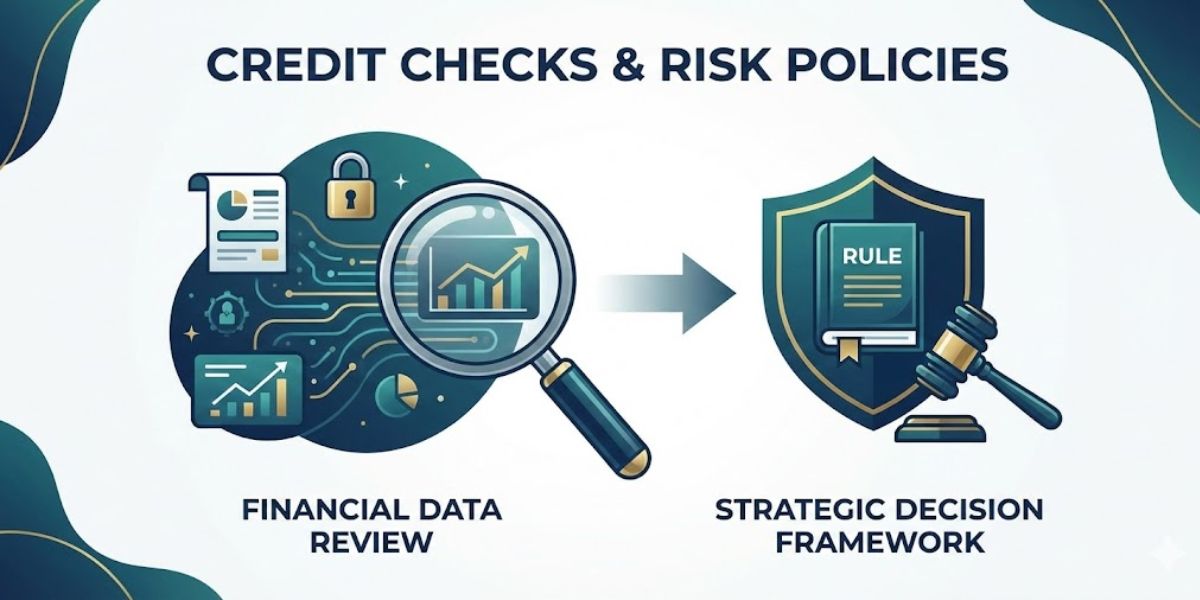
- Credit checks supply the data, while risk policies provide the decision framework that protects a business from loss.
- Industries like lending, trade credit, leasing, insurance, and invoice factoring rely heavily on these processes for financial safety.
- Understanding both systems allows businesses to reduce bad debt, detect red flags, and set better credit limits.
What Is a Credit Check?
A credit check is an evaluation of a person’s or business’s financial history used to determine creditworthiness. It pulls details from credit bureaus and public records to show how reliably the applicant pays their obligations.
Businesses use credit checks to gauge risk before offering credit terms, loans, leases, or insurance. They help decision-makers understand whether a customer is likely to repay on time.
Credit checks are used in lending, B2B trade credit, supplier onboarding, and other financial agreements, creating a foundation for all risk-based decisions.
How Do Credit Checks Work?
Credit checks work by collecting financial data from multiple verified sources and compiling it into a credit report. These reports summarize balances, payment history, credit utilization, and legal filings to show overall stability.
The process matters because it gives businesses objective metrics for evaluating risk. It prevents decisions from being based on assumptions or incomplete information.
To understand the process more clearly, it helps to look at the key components behind every credit check.
Data Sources Used in Credit Checks
Credit checks pull information from credit bureaus, financial institutions, public records, and trade references. These sources verify payment behavior, outstanding debts, and past financial actions.
What Information Appears in a Credit Report?
A credit report includes payment history, credit utilization ratios, account balances, and any legal filings such as liens or bankruptcies. It also includes business data like company age, trade credit activity, and credit limit recommendations.
Soft vs. Hard Credit Inquiries
Soft inquiries review credit without affecting the score, usually done for pre-approvals or background checks. Hard inquiries impact the credit score and are used when a business formally applies for credit or financing.
What Are Risk Policies In Business Finance?
Risk policies are structured rules companies use to determine whether a customer qualifies for credit or financial services. They outline acceptable risk levels and define the criteria required for approval.
Businesses create risk policies to protect themselves from financial losses and create consistency in decision-making. These policies blend compliance rules, financial thresholds, and industry-specific requirements.
Effective risk policies act as a control system that guides approvals, prevents exposure, and ensures decisions are based on measurable standards.
How Do Credit Checks Influence Risk Policies?
Credit checks provide the underlying data that risk policies use to determine approval outcomes. They supply measurable indicators such as payment behavior, credit scores, and debt levels.
Companies apply their risk policies to credit reports to decide whether to approve, decline, or request additional documentation. This process connects raw data to structured decision frameworks.
For example, lenders may require a minimum score, suppliers may require clean payment history, and insurers may adjust premiums based on risk scores.
What Factors Are Evaluated In a Credit Check?
A credit check reviews key financial indicators that reveal how reliably an individual or business manages obligations. These factors form the foundation of creditworthiness and help predict the likelihood of consistent, on-time repayment.
Payment History
Payment history shows whether previous loans, credit lines, or invoices were paid as agreed. Frequent late payments or defaults signal increased financial risk.
Credit Utilization and Debt Ratios
Credit utilization reflects how much available credit is currently in use, while debt ratios measure overall leverage relative to income or revenue. High utilization or excessive debt levels suggest potential financial strain.
Legal Filings and Public Records
Bankruptcies, tax liens, and court judgments indicate significant past financial challenges. These filings weigh heavily in risk assessments because they reflect patterns of instability.
Cash Flow and Financial Stability
For businesses, steady revenue and reliable cash flow demonstrate operational strength. Irregular earnings or declining financial performance point to elevated repayment risk.
Why Are Risk Policies Important For Business Decisions?
Risk policies protect companies from taking on clients who may not pay or who pose higher default risk. They help maintain healthy cash flow and reduce exposure to loss.
These policies also prevent fraud by requiring verification, documentation, and clear approval thresholds. They make financial decisions more controlled and predictable.
Understanding their importance leads naturally into how different industries rely on these frameworks.
What Types Of Risk Policies Do Companies Use?
Companies use different types of risk policies to control financial exposure and maintain consistent decision-making. These policies outline how risk is identified, evaluated, and monitored across customer accounts.
Credit Approval Policies
Credit approval policies establish the minimum qualifications required for a customer to receive financing or credit terms. They define thresholds for credit scores, payment behavior, and overall financial strength.
Risk Categorization (Low, Medium, High)
Risk categorization groups customers into tiers based on credit data, financial documents, and behavioral patterns. These tiers guide approval decisions, credit limits, and required safeguards.
Documentation Requirements
Documentation policies specify which financial records must be submitted to verify a customer’s stability. Common requirements include bank statements, tax filings, or audited financial reports.
Monitoring and Review Cycles
Monitoring policies determine how often customer accounts should be reevaluated for changes in risk. Regular reviews help companies catch early warning signs and adjust credit terms before issues escalate.
Which Industries Rely On Credit Checks And Risk Policies?
Credit checks are essential in industries where businesses extend financial trust before receiving payment. These checks reduce exposure, support safer transactions, and ensure long-term financial stability.
Banks and Lenders
Banks use credit checks to assess loan applications and determine appropriate interest rates. Strong credit profiles help lenders approve financing with lower risk.
Suppliers and Trade Credit Vendors
Suppliers rely on credit reviews to set credit limits, payment terms, and eligibility for net accounts. This protects them from slow-paying or high-risk buyers.
Leasing and Insurance Providers
Leasing companies and insurers evaluate credit to determine premium pricing and contractual conditions. Reliable credit data helps them predict the long-term risk of each client.
Invoice Factoring (Small Mention Only)
Factoring companies check the credit of account debtors to ensure submitted invoices are backed by reliable payers. This verification allows them to advance funds confidently and reduce default risk.
How Should Businesses Conduct Credit Checks Effectively?
- Verify Identity: Always confirm the applicant’s legal identity and business registration details before reviewing financials. This prevents fraud and ensures data accuracy.
- Review Full Credit Reports: Analyze payment trends, utilization, and public records, not just the score. A deeper review gives more accurate insights.
- Check Trade References: Contact suppliers or partners to verify real-world payment behavior. References reveal reliability beyond numbers.
- Assess Cash Flow Data: For businesses, request financial statements to understand operating stability. Strong cash flow reduces repayment risk.
- Run Compliance Checks (KYC/AML): Ensure applicants meet regulatory standards and show no signs of suspicious activity. This step prevents legal and financial exposure.
- Set Review Cycles: Reevaluate accounts periodically to catch early warning signs. Ongoing monitoring prevents sudden financial surprises.
What Are Common Red Flags In Credit Checks?
- Chronic Late Payments: Repeated delays show unstable cash flow or poor financial discipline.
- High Credit Utilization: Using most or all available credit suggests stress or overextension.
- Multiple Recent Credit Inquiries: Frequent applications signal financial desperation or urgent cash needs.
- Legal Filings: Bankruptcies, liens, and judgments indicate prior financial failures.
- Inconsistent Financial Records: Sudden revenue drops or irregular statements suggest deeper operational issues.
How Do Credit Checks and Risk Policies Affect Freight Factoring?
Credit checks are central to freight factoring because factoring companies review the credit strength of brokers and shippers before funding invoices. This ensures that the loads carriers haul are backed by payers with proven reliability.
How Credit Checks Protect Carriers?
Factoring companies use credit data to confirm whether a broker or shipper has a strong payment history. This prevents carriers from submitting invoices tied to high-risk or slow-paying partners.
How Risk Policies Shape Funding Decisions?
Risk policies determine advance rates, approval conditions, and funding limits for each account. These rules help factoring providers manage exposure and maintain consistent cash flow for carriers.
How Factoring Companies Flag High-Risk Brokers?
When a carrier submits an invoice, the factoring company screens the broker’s credit score, legal filings, and payment patterns. Any risk indicators trigger additional review or load rejection.
Why This Matters for Trucking Companies?
Freight factoring offers predictable cash flow because invoices tied to strong brokers are approved quickly. This stability allows carriers to cover fuel, repairs, and payroll without payment delays.
Leave a Reply