Key Takeaways:
- Chargebacks, disputes, and collections describe different stages of payment issues that affect how money moves between customers and businesses.
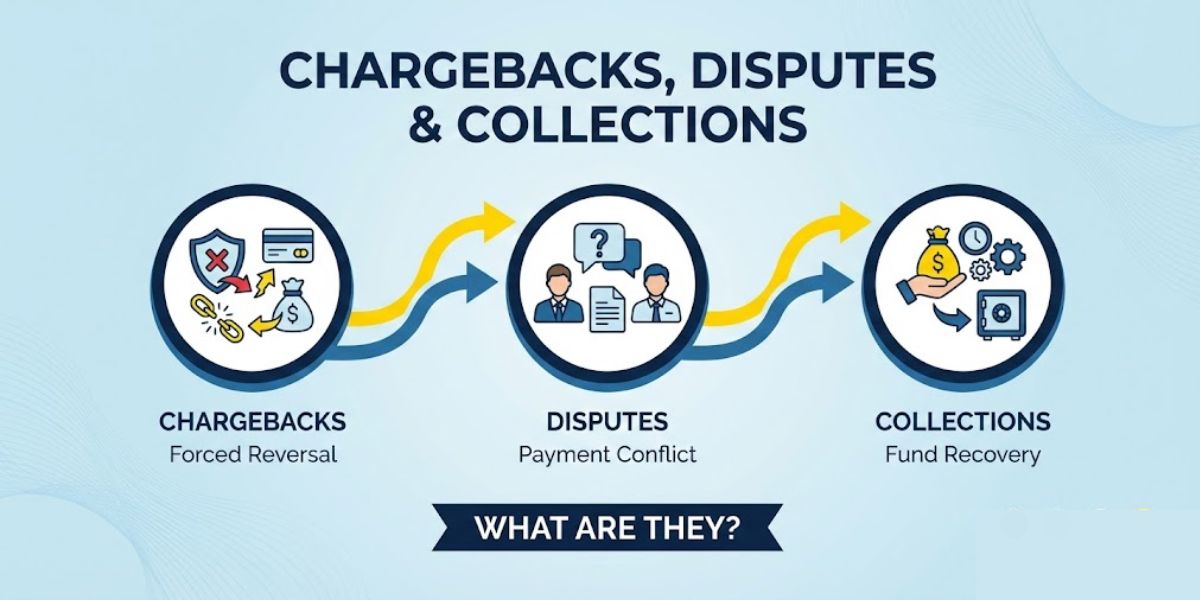
- Chargebacks reverse payments through the bank, while disputes question a transaction and collections pursue invoices that were never paid.
- Factoring companies manage disputes and collections for purchased invoices, but unresolved issues can lead to factoring chargebacks.
- Clear documentation, accurate invoicing, and strong customer screening help businesses prevent chargebacks and minimize factoring risks.
What Is a Chargeback?
A chargeback is a forced reversal of a payment that happens when a customer disputes a transaction with their bank. It acts as a consumer protection mechanism, ensuring cardholders are not held responsible for fraudulent or incorrect charges.
When a chargeback is initiated, the issuing bank temporarily refunds the customer while it investigates the claim. During this process, the merchant must provide evidence proving the transaction was valid and authorized.
If the bank decides in the customer’s favor, the payment is permanently reversed and the merchant absorbs the loss. Because the funds are pulled back through the banking network, chargebacks carry financial consequences that go beyond a simple refund.
Why Do Chargebacks Happen?
- Unauthorized Use: Disputes arise when a cardholder reports a transaction they didn’t make, often linked to fraud or stolen card data. Banks reverse these charges quickly to protect the customer.
- Billing Errors: Duplicate charges, incorrect amounts, or mistaken recurring payments commonly trigger chargebacks. These issues surface when the billed total doesn’t match what the customer agreed to.
- Delivery Failures: Customers file disputes when goods don’t arrive, arrive late, or arrive in unacceptable condition. These situations frequently occur in online orders or logistical delays.
- Service Issues: Incomplete work, unavailable services, or outcomes that don’t match the agreement can lead customers to challenge the charge. When expectations aren’t met, disputes escalate easily.
- Processing Glitches: System errors, gateway failures, or accidental multi-charges result in transactions customers don’t recognize. These technical problems often appear as unexpected or inconsistent activity.
- Policy Conflicts: Ambiguous return rules or restrictive refund terms push customers to seek bank intervention instead of resolving the issue with the merchant. Lack of clarity increases dispute likelihood.
- Documentation Gaps: Missing receipts, unclear descriptions, or vague invoice details can make buyers question a payment’s validity. Weak documentation leaves merchants with limited evidence during review.
How Do Chargebacks Work In Financial Transactions?
- Customer Dispute: The process starts when a cardholder challenges a transaction with their bank, usually due to an error, concern, or unexpected charge.
- Bank Review: The issuing bank checks basic details to confirm the claim is reasonable before moving the case forward.
- Provisional Credit: The bank temporarily refunds the customer while withdrawing the same amount from the merchant’s account.
- Merchant Notification: The merchant receives a formal notice and is asked to provide evidence supporting the validity of the transaction.
- Evidence Evaluation: The bank reviews receipts, delivery records, and communication logs to determine which side has stronger documentation.
- Final Decision: The bank decides whether the customer keeps the refunded amount or the funds return to the merchant based on the evidence.
- Merchant Impact: The outcome affects the merchant’s chargeback ratio, which influences processing risk, fees, and account standing.
How Does The Chargeback & Dispute Process Work?
Step 1 – Customer Files a Dispute
The cardholder contacts their issuing bank to contest a transaction. The bank reviews the claim and temporarily credits the customer.
Step 2 – Issuer Reviews the Claim
The issuing bank investigates the reason for the dispute based on the cardholder’s details. If the claim is valid on its face, it is forwarded to the merchant’s bank.
Step 3 – Merchant Responds With Evidence
The merchant’s bank notifies the merchant of the dispute and requests proof supporting the charge. Evidence can include receipts, delivery confirmation, and communication records.
Step 4 – Final Decision by Issuer
The issuing bank evaluates both sides and determines who is responsible. If the merchant loses, the payment remains reversed; if not, the funds are returned.
What’s The Difference Between a Chargeback, Refund & Dispute?
| Key Difference | Refund | Dispute | Chargeback |
| Who Starts It | Merchant initiates | Customer questions the charge | Bank reverses the payment |
| Level of Escalation | No escalation | Low-level inquiry | Highest escalation through card network |
| Merchant Control | Full control over outcome | Partial control during clarification | No control once bank takes over |
| Evidence Needed | None required | May require explanation | Requires formal evidence submission |
| Financial Impact | Payment returned only | Funds may be held temporarily | Loss of funds + chargeback fees |
| Reputation Risk | No negative impact | Minimal impact | Impacts merchant processing history |
| Processing Timeline | Fast and handled internally | Moderate, depends on communication | Long, bank-driven timeline |
| Reason Trigger | Customer dissatisfaction or error | Confusion or unclear transaction | Fraud, delivery issues, or unresolved dispute |
| Business Risk | No long-term risk | Manageable if addressed early | High risk including penalties or account holds |
| How Funds Move | Merchant issues the return | No movement unless escalated | Bank forcefully pulls funds back |
What Are The Costs & Risks Of Chargebacks?
- Revenue Loss: Merchants lose the original transaction amount when a chargeback is approved, even if the product was delivered.
- Chargeback Fees: Processors add fees to each case, increasing the total cost beyond the reversed payment itself.
- Operational Strain: Teams spend time gathering documents, responding to banks, and managing disputes instead of daily operations.
- Inventory Risk: Products shipped before the dispute are rarely returned, leading to permanent merchandise loss.
- Higher Costs: Frequent chargebacks raise processing rates and may place a merchant in a high-risk category.
- Account Threats: Excessive chargebacks can trigger monitoring programs or result in merchant account termination.
- Reputation Damage: A pattern of disputes signals poor reliability to processors, lenders, and payment partners.
What Are Collections In a Payment Or B2B Context?
Definition of Collections
Collections refer to the process of pursuing overdue or unpaid invoices when a customer fails to pay within agreed terms. It involves structured follow-ups, reminders, and escalation steps to secure the outstanding balance.
When Collections Begin
Collections typically start after a payment becomes past due and standard reminders fail to resolve the issue. Businesses or third-party agencies step in to recover the amount before it becomes a larger financial risk.
Collections vs. Chargebacks
Collections focus on retrieving money that was never paid, while chargebacks involve reversing funds that were already received. Collections rely on direct communication and documentation, whereas chargebacks operate through the banking network.
What Is Invoice Factoring?
Invoice factoring is a financing method where a business sells its unpaid invoices to a factoring company in exchange for immediate cash. It helps companies improve cash flow without waiting for customers to settle their accounts.
The factor advances a percentage of the invoice value upfront and releases the remaining balance once the customer pays. This structure allows businesses to manage operating expenses more efficiently, especially when dealing with slow-paying clients.
Because the factor now handles payment collection, the business reduces its administrative burden and credit risk. This shift makes factoring a practical option for companies looking to stabilize cash flow and maintain steady operations.
How Do Chargebacks, Disputes & Collections Work in Factoring?
Factoring Chargebacks Explained
Factoring chargebacks occur when a customer disputes or fails to pay an invoice the factor has already purchased. In these cases, the factor returns the uncollectible invoice to the client and recovers the advanced funds.
Common Triggers for Factoring Disputes
Disputes often arise from delivery issues, incomplete services, pricing errors, or missing documentation. These problems make the customer withhold payment, prompting the factor to investigate the validity of the invoice.
Role of Documentation in Resolving Issues
Factors rely heavily on clear paperwork such as proof of delivery, signed work orders, and accurate billing. Strong documentation helps determine whether the invoice is collectible or should be charged back to the client.
How Collections Shift to the Factor
Once an invoice is sold, the factor manages communication, reminders, and payment follow-ups with the customer. This transfer of responsibility lets businesses focus on operations while the factor handles recovery.
Recourse vs Non-Recourse Factoring: Who Bears the Risk?
Recourse Factoring
In recourse agreements, the business must buy back or repay invoices the factor cannot collect. Most factoring chargebacks occur in this model.
Non-Recourse Factoring
Non-recourse factoring protects the business from customer non-payment under approved credit risks. This model may exclude disputes related to service or delivery issues.
Which Option Reduces Chargeback Exposure
Non-recourse factoring reduces risk but often comes with stricter credit requirements. Recourse factoring offers lower fees but places more liability on the business.
How Factoring Companies Handle Collections & Disputes?
- Credit Checks: Factors review a customer’s credit history before purchasing invoices to reduce the chance of non-payment. This upfront screening helps prevent avoidable disputes later.
- Invoice Verification: They confirm invoice details such as amounts, delivery dates, and supporting documents before funding. This ensures the invoice is accurate and collectible.
- Customer Follow-Ups: Factors handle routine payment reminders and communication with the customer. This shifts the collection workload away from the business.
- Dispute Review: When a customer raises an issue, the factor evaluates the claim using delivery records, contracts, or service notes. This step determines whether the dispute is valid or needs further clarification.
- Responsibility Assessment: Factors identify whether the payment issue stems from customer credit risk or service errors by the business. This distinction guides how the dispute is resolved.
- Chargeback Decisions: If an invoice is uncollectible due to a customer-side issue, the factor may hold reserves or return the invoice to the client. This allows the factor to recover funds advanced upfront.
- Resolution Communication: Factors keep the business informed throughout the process, sharing updates on payment status or dispute outcomes. This transparency helps both sides manage expectations.
Best Practices to Avoid Chargebacks & Factoring Disputes?
- Clear Invoicing: Use accurate descriptions, itemized details, and consistent billing formats to prevent confusion that leads to disputes.
- Strong Documentation: Keep proof of delivery, signed work orders, and communication records ready for verification whenever needed.
- Customer Screening: Evaluate customer creditworthiness before extending terms to reduce the chance of non-payment or disputed invoices.
- Accurate Delivery: Ensure services or goods are delivered as promised, since incomplete or late deliveries are a major source of disputes.
- Transparent Policies: Share terms, pricing, and expectations upfront so customers understand obligations and payment timelines.
- Fast Communication: Address customer concerns quickly to resolve issues early and prevent them from escalating to a chargeback or dispute.
- Non-Recourse Choice: Consider non-recourse factoring for high-risk accounts to limit exposure to chargebacks tied to customer insolvency.
- Consistent Follow-Up: Keep customers updated on invoices, reminders, and any discrepancies to maintain smooth payment flow.
- Internal Reviews: Monitor dispute patterns regularly to identify operational gaps that may trigger recurring issues.
Final Thoughts
Chargebacks, disputes, and collections each influence how a business manages payments and protects its cash flow. Understanding how they work and how they differ helps companies respond quickly and avoid unnecessary financial losses.
When factoring is part of the process, disputed or unpaid invoices carry an even greater impact on stability. By using clear documentation, consistent communication, and accurate invoicing practices, businesses can reduce chargeback exposure and maintain smoother operations.
Leave a Reply