Key Takeaways:
- Freight factoring helps trucking companies maintain steady cash flow by converting unpaid invoices into immediate working capital.
- Average factoring rates in trucking typically range between 1.5% and 5%, with recourse factoring offering lower costs and non-recourse factoring providing added risk protection.
- Additional fees like setup, wire transfer, or collection charges can influence the total cost, making transparency and rate structure key when choosing a factoring partner.
- Routiqo freight factoring stands out as a reliable option, offering fast 24-hour payments, competitive 1.5% rates, and full-service support designed for operational stability and financial efficiency.
What is Freight Factoring?
Freight factoring allows trucking companies to convert their unpaid invoices into immediate cash by selling them to a factoring company at a discounted rate. This process gives carriers access to working capital without waiting for clients to pay their bills.
The factoring company then takes over the responsibility of collecting payment from the shippers or brokers, reducing the administrative burden on the trucking business. In exchange for this service, the factoring company charges a small percentage of the invoice value as a fee.
For many small fleets and owner-operators, freight factoring serves as a practical solution to cash flow challenges caused by delayed client payments. It ensures they can manage essential expenses such as fuel, maintenance, and driver wages without financial strain.
How Does Freight Factoring Work?
Freight factoring involves a few simple steps:
- Invoicing: After completing a delivery, the trucking company sends an invoice to its client for the freight services provided.
- Selling the Invoice: The trucking company submits the invoice to the factoring company for review. The factoring company then assesses the quality of the invoice and the reliability of the client.
- Advance Payment: Once the factoring company accepts the invoice, they provide an upfront payment, typically between 80% and 90% of the total invoice amount. This is known as the “advance rate.”
- Collection: The factoring company takes over the responsibility of collecting payment from the client.
- Final Payment: Once the factoring company receives the full payment from the client, they send the remaining balance (minus the factoring fee) to the trucking company.
What are Factoring Fees?
Factoring fees, or factoring rates, represent the amount charged by the factoring company for their services. These fees vary depending on several factors, including the volume of invoices, the risk associated with the client, and the payment terms.
The fee is typically calculated as a percentage of the total invoice amount and is often referred to as the “discount rate.” It’s important to note that factoring rates are not one-size-fits-all, and they can vary significantly based on different variables. To understand the average factoring rates in trucking, let’s break down the factors that influence these rates.
Factors Affecting Factoring Rates
Invoice Volume
Trucking companies that handle a high volume of invoices often secure lower factoring rates. A larger invoice volume provides consistent business for the factoring company, reducing its risk and allowing it to offer more competitive pricing.
Creditworthiness of Clients
The reliability and financial stability of a trucking company’s customers have a direct impact on factoring rates. When clients have strong credit histories and a record of timely payments, factoring companies view the risk as lower and charge reduced fees.
Invoice Terms
The time it takes for a customer to pay an invoice significantly influences the factoring cost. Shorter payment terms, such as 30 days, typically lead to lower fees, while longer terms of 60 or 90 days result in higher rates since the factoring company waits longer to recover the funds.
Industry Experience
Experienced trucking companies with steady cash flow and reliable clients usually receive better factoring terms. Their proven track record builds confidence with factoring providers, which translates into lower fees and more favorable advance rates.
Factor Type
The type of factoring agreement also affects the overall rate. Recourse factoring is less expensive because the trucking company assumes responsibility if a client doesn’t pay, while non-recourse factoring costs more since the factoring company takes on that risk.
Industry-Specific Factors
Market conditions within the trucking industry can influence factoring costs. Changes in fuel prices, freight demand, or overall economic stability can lead factoring companies to adjust their rates to reflect increased or reduced financial risk.
What Are the Average Factoring Rates in Trucking?
Freight factoring rates are usually expressed as a percentage of the invoice amount and can range anywhere from 1% to 5% per month. The exact rate depends on several factors, including those outlined above.
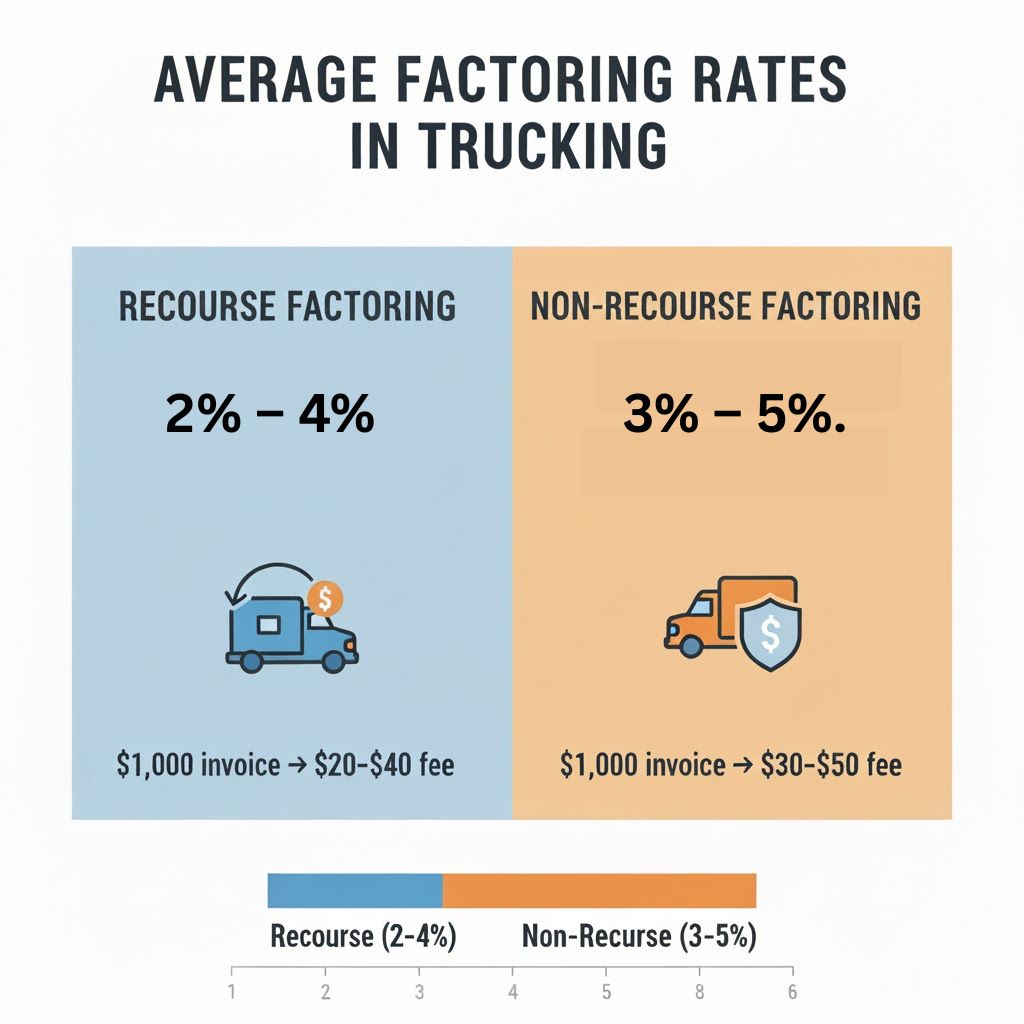
On average, trucking companies can expect to pay a factoring fee between 2% and 4% for recourse factoring. This means that for every $1,000 invoice, the trucking company will receive an advance of $800 to $900 (depending on the advance rate), and the factoring company will keep $20 to $40 as their fee.
If a trucking company opts for non-recourse factoring, the fees can be slightly higher, typically ranging from 3% to 5%. This is because the factoring company assumes the risk of non-payment by the customer.
What Additional Fees Should You Consider?
Apart from the factoring rate, trucking companies may be subject to additional fees, which can further impact the overall cost of factoring services:
- Set-Up Fees: Some factoring companies charge an initial fee to set up the account. This can range from a few hundred dollars to a few thousand, depending on the complexity of the services provided.
- Wire Transfer Fees: If the trucking company requests that funds be wired directly into their account, some factoring companies may charge a fee for this service.
- Monthly Maintenance Fees: Some factoring companies charge a flat monthly fee to manage the account, regardless of how many invoices are factored.
- Collection Fees: If the factoring company is required to make extensive efforts to collect payment from a client, they may charge additional fees for these services.
Pros and Cons of Freight Factoring
Before deciding to factor invoices, trucking companies should carefully weigh the pros and cons of the service.
Pros:
- Immediate Cash Flow: The primary benefit of factoring is the ability to access immediate cash flow. This can help trucking companies pay their drivers, cover operational costs, and avoid financial difficulties.
- No Debt Incurred: Unlike loans or lines of credit, factoring does not create debt on the company’s balance sheet.
- Flexibility: Factoring is a flexible financing option, especially for companies with fluctuating cash flow needs.
Cons:
- Cost: The primary drawback of factoring is the cost. The fees can add up over time, especially if the company frequently factors invoices.
- Loss of Control: By factoring invoices, trucking companies lose control over their customer relationships, as the factoring company handles collections.
- Dependence on Factoring: If a trucking company becomes too reliant on factoring, it may not be able to scale its business without factoring fees eating into profits.
When Is Freight Factoring a Good Option?
Freight factoring is a good option for trucking companies that:
- Are experiencing cash flow issues due to delayed payments.
- Are looking for a flexible financing option that doesn’t require taking on debt.
- Have customers with reliable credit histories and solid payment records.
- Need quick access to working capital to keep their operations running smoothly.
On the other hand, it may not be the best option for companies with strong cash reserves or those that have the capacity to negotiate better payment terms with clients.
Which Freight Factoring Company is a Good Option?
Routiqo freight factoring is an excellent option for trucking companies seeking dependable cash flow and quick access to working capital. It ensures that carriers get paid within 24 hours of submitting invoices, eliminating the delays that often come with extended payment terms from shippers and brokers.
This freight factoring solution is ideal for established fleets that prioritize transparency, competitive rates, and professional financial management. With factoring fees starting at 1.5% and no hidden charges, Routiqo provides a cost-effective way for companies to maintain liquidity and manage operating expenses with confidence.
Routiqo’s comprehensive service extends beyond funding by including credit protection, advanced online tools, and 24/7 customer support. Its structured process and reliable turnaround make it a trusted choice for trucking businesses that value efficiency, financial control, and long-term stability in their operations.
Leave a Reply