Key Takeaways
- Load boards help carriers find and book suitable freight quickly, keeping trucks active and routes profitable.
- Freight factoring ensures steady cash flow by converting completed load invoices into immediate payments.
- Using both tools together allows carriers to manage operations smoothly without financial delays or downtime.
- Consistent monitoring of rates, broker reliability, and factoring costs strengthens long-term business stability.
What is a Load Board?
A load board is a digital platform that connects freight brokers, shippers, and trucking companies to move cargo efficiently. It functions as a marketplace where brokers post available loads, and carriers search for freight that matches their equipment type, preferred lanes, and pricing goals.
Most load boards operate in real time, giving carriers instant access to thousands of verified freight listings across the country. They display essential details such as pickup and delivery locations, load weight, rate per mile, and broker credit score, helping drivers make quick, informed decisions before accepting a job.
For small fleets and independent owner-operators, a load board serves as both a business tool and a growth opportunity. It enables them to fill empty miles, maintain steady cash flow, and build lasting relationships with reputable brokers and shippers in the logistics network.
How Load Boards Work?
- Freight Posting by Brokers and Shippers: Brokers and shippers list available loads with details such as pickup location, destination, weight, type of freight, and desired delivery date.
- Search and Match by Carriers: Trucking companies and owner-operators use filters to find loads that match their equipment type, preferred lanes, and target rates per mile.
- Real-Time Updates: Load boards refresh continuously, allowing carriers to view new listings, rate changes, and time-sensitive loads instantly.
- Broker Credit Verification: Many platforms include broker credit ratings, payment history, and days-to-pay data to help carriers assess financial reliability before accepting a load.
- Rate Negotiation and Communication: Once a suitable load is found, carriers contact the broker directly through the platform or by phone to negotiate rates and confirm terms.
- Load Booking and Confirmation: After both parties agree, a rate confirmation is issued, outlining payment details, delivery schedule, and contract terms.
- Integration with Factoring and Dispatch Tools: Modern load boards connect with factoring services, GPS tracking, and dispatch software to streamline operations and improve payment turnaround times.
What Are the Different Types of Load Boards?
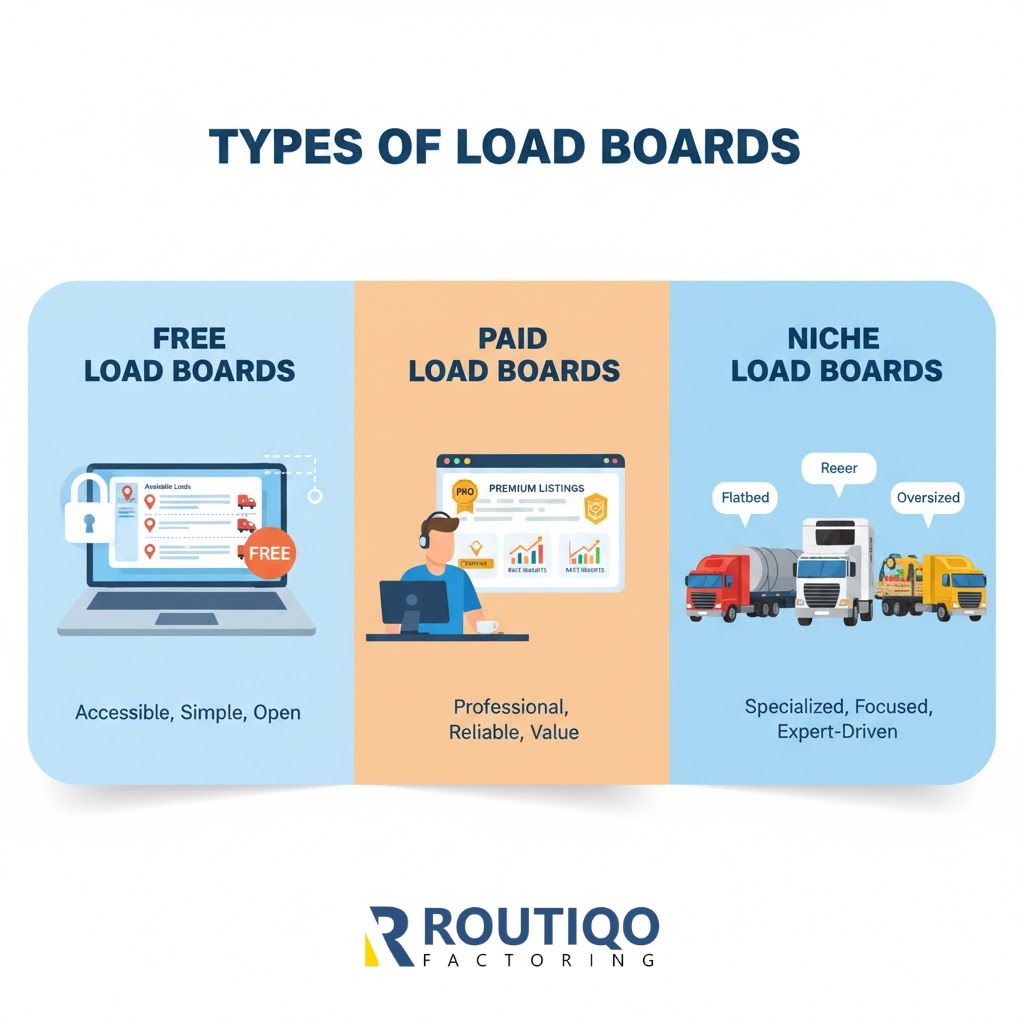
Free Load Boards
Free load boards give carriers open access to freight listings without any subscription costs. These platforms are useful for independent drivers who want to test new routes, fill empty miles, or find work quickly without long-term commitments.
Paid Load Boards
Paid load boards provide access to verified brokers, rate insights, and advanced filtering tools that improve load selection. Subscribing to these platforms helps carriers secure dependable freight options, streamline negotiations, and maintain consistent profit margins.
Niche Load Boards
Niche load boards concentrate on specialized freight such as flatbed, refrigerated, or oversized shipments. By connecting carriers with targeted shippers, these platforms allow operators to focus on their expertise and build stable, long-term hauling relationships.
What Are the Benefits & Limitations of Using Load Boards?
| Benefits of Using Load Boards | Limitations of Using Load Boards |
| Access to multiple freight options nationwide. | High competition reduces rate margins. |
| Helps reduce empty miles through quick backhauls. | Some loads come from unreliable brokers. |
| Offers flexibility in route and load selection. | Rates can fluctuate due to market demand. |
| Enables faster load booking and communication. | Constant searching consumes operational time. |
| Supports new carriers in building client networks. | Dependence limits direct shipper relationships. |
What is Freight Factoring?
Freight factoring is a simple way for trucking companies to get paid faster without waiting weeks for brokers to process invoices. Instead of holding out for long payment cycles, carriers sell their invoices to a factoring company and receive most of the money right away.
This quick access to cash helps carriers stay on top of fuel costs, driver pay, and maintenance expenses. With steady cash flow, businesses can keep their trucks moving, take on more loads, and focus on growth instead of chasing payments.
The Connection Between Load Boards and Factoring
Load boards and freight factoring complement each other by balancing workload and cash flow. Carriers find new freight through load boards and use factoring to get paid quickly after delivery.
This connection allows trucking businesses to operate without financial interruptions. Immediate payment from factoring covers fuel, maintenance, and payroll while new loads are booked from the boards.
Together, these tools create a consistent business cycle. Carriers keep their trucks moving, maintain cash stability, and avoid downtime caused by delayed broker payments.
How Do They Work Together in Practice?
Carriers use load boards to find and book freight that fits their routes and equipment. After delivering the load, they collect proof of delivery and submit the invoice to a factoring company for quick payment.
The factoring company verifies the broker’s credit and advances most of the payment within a day or two. Once the broker pays the invoice, the factoring company settles the balance, keeping the carrier’s cash flow steady for new loads.
Common Risks When Combining Load Boards and Factoring
- Factoring Restrictions: Some factoring companies won’t fund loads from brokers they haven’t approved. Always confirm before hauling.
- Hidden Fees: Look for transparent pricing. Some factoring firms charge setup, processing, or wire fees that can add up quickly.
- Dependency: If you rely solely on load boards and factoring, you might neglect building direct shipper relationships, which usually pay better and faster.
How to Use Load Boards and Factoring Effectively?
Step 1: Choose a Reliable Load Board
Select a load board that provides verified broker information and clear payment history. Set filters based on equipment type, preferred routes, and minimum rate per mile to find the most suitable loads.
Step 2: Pick the Right Factoring Partner
Work with a factoring company experienced in the trucking industry and familiar with load-board invoices. Confirm their advance percentage, contract type, and funding timeline to ensure smooth and consistent payments.
Step 3: Maintain Clean Documentation
Submit rate confirmations, bills of lading, and proof of delivery promptly after each load. Keep well-organized digital copies, as missing or unclear paperwork can delay payment processing.
Step 4: Track and Optimize
Review factoring fees regularly and compare them against overall revenue to maintain profitability. Analyze load board data to identify strong lanes, adjust routes strategically, and reinvest earnings into maintenance and driver retention.
Leave a Reply