Key Takeaways:
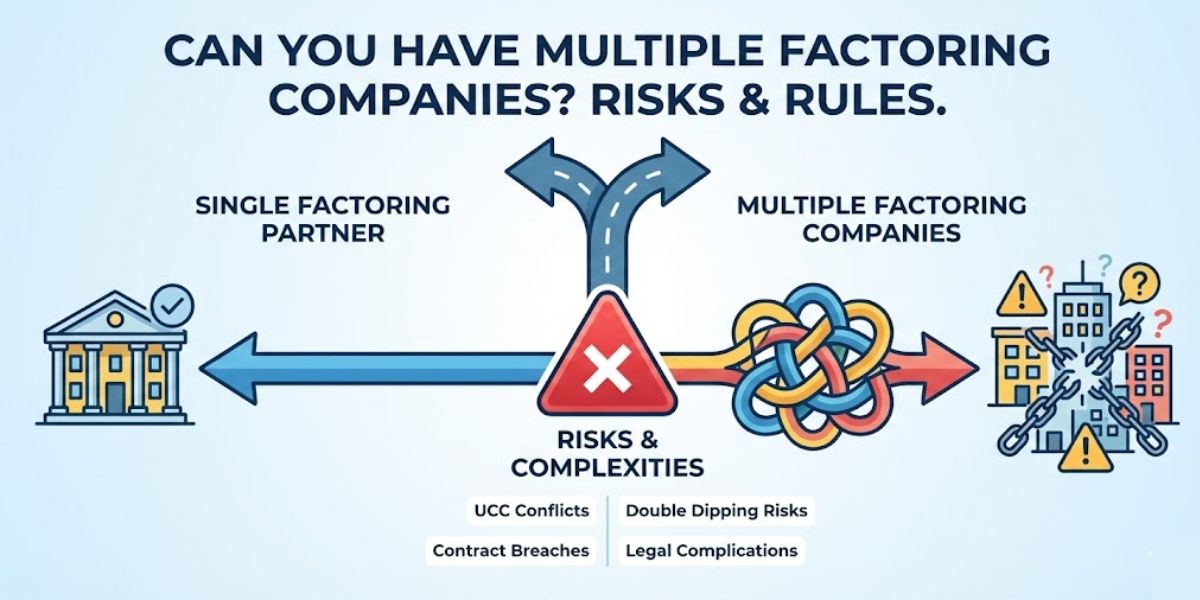
- You usually cannot work with multiple factoring companies because the first factor’s UCC-1 filing blocks any additional lenders.
- Notices of Assignment and contract controls prevent a second factor from financing or collecting the same invoices.
- Multiple factors are only possible when assets are fully separated, legal entities are distinct, or lenders agree through structured arrangements.
- If you need more funding, the safest options are increasing your limit with your current factor or switching through a clean buyout.
Can You Legally Have Multiple Factoring Companies at the Same Time?
Most businesses cannot legally work with multiple factoring companies because the first factor’s UCC-1 filing gives them exclusive rights to your receivables. This legal claim prevents any other factor from funding the same invoices.
Even if a second factor is willing to review your account, they cannot move forward once they discover an existing UCC filing and Notice of Assignment. These documents give the first factor full control over collections, leaving no room for another lender.
Because of these restrictions, attempting to use more than one factor creates immediate conflicts and potential compliance issues. This is why businesses often explore higher credit limits or a formal buyout instead of trying to stack multiple factoring relationships.
How Do Factoring Agreements Prevent You From Using More Than One Factor?
Exclusivity Clause
Factoring agreements include an exclusivity clause that gives one company the sole right to finance and collect your receivables. This clause blocks any other lender from purchasing the same invoices.
Notice of Assignment
Once a Notice of Assignment is sent to your customers, all payments must legally go to the factor on record. A second factor cannot step in because the customer already has binding payment instructions.
Control of Receivables
Factoring contracts give the factor full control over your accounts receivable, including verification and collections. Since only one company can manage these rights at a time, adding another factor becomes impossible.
Why Does a UCC-1 Filing Block You From Using Multiple Factoring Companies?
First-Position Collateral Rights
A UCC-1 filing gives the factor first-position rights over your accounts receivable, meaning they legally hold the primary claim on your invoices. Because factors only fund when they have top priority, no second factor can step in behind an existing lien.
Conflicts With Competing Filings
If another factor files a UCC-1 on the same receivables, it automatically falls into a lower, unsecured position. Since this exposes them to full repayment risk, they will not finance your invoices.
Clear Ownership and Collection Control
The UCC-1 filing publicly establishes who owns the receivables and who is allowed to collect payments. With one factor holding legal control, a second factor cannot legally purchase, verify, or collect the same invoices.
When Is It Actually Possible to Work With More Than One Factoring Company?
Separate Asset Classes
You can use more than one factoring company when each lender finances a different asset, such as one handling accounts receivable while another manages purchase order financing. Because the collateral does not overlap, no UCC conflict is created.
Distinct Legal Entities or Divisions
Multiple factors are possible if your business operates through separate legal entities or divisions with unique EINs. Each entity maintains its own receivables, allowing different factors to fund without interfering with one another.
Structured Agreements Between Lenders
In rare cases, lenders allow shared financing through subordination or intercreditor agreements. These arrangements clearly divide rights and priorities so both funders can operate without collateral disputes.
Why Do Businesses Try to Use More Than One Factoring Company?
Some companies look for additional factoring partners because their current provider’s funding limits no longer meet their cash flow needs. As a business grows, its existing credit facility may fall behind, making owners feel pressured to find supplemental financing.
Slow-paying customers can also tighten working capital and push businesses to seek more aggressive funding options. In many cases, restrictive contract terms or unresolved disputes make owners explore additional factors without realizing the structural conflicts involved.
How Does a Buyout Work When Switching Factoring Companies?
A factoring buyout lets a new lender take over your receivables by paying off the current factor and securing first-position rights.
What Happens to the Existing UCC Filing During a Buyout?
The original factor files a UCC-3 termination once the payoff is complete. This removes their lien and allows the new factor to file in first position.
How Are Fees and Reserves Settled?
All fees, reserves, and remaining balances are calculated during the payoff process. The buyout amount includes every outstanding obligation to close the account cleanly.
What Steps Does the New Factor Take Before Funding?
The new factor verifies open invoices, reviews payment history, and confirms debtor reliability. Funding begins only after lien priority is secured and all verifications are cleared.
What Should You Do If You Need More Funding Than One Factor Can Provide?
Businesses that outgrow their current credit limits can request a higher advance rate or expanded funding line from their existing factor. Many providers adjust limits as clients scale and demonstrate stronger payment performance.
Can You Increase Your Funding Limits With Your Current Factor?
Most factors will reevaluate your limit if you have solid customer pay history and steady invoice volume. Updated financials and improved debtor quality often justify a higher advance.
Is It Better to Switch Factors Instead of Adding One?
Switching is usually safer because only one factor can legally control your receivables at a time. A structured buyout avoids conflicts and keeps your funding compliant.
What Other Financing Options Don’t Conflict With Factoring?
Products like PO financing, equipment loans, or merchant cash advances can supplement working capital without touching your receivables. These options help you boost cash flow without violating your factoring agreement.
Final Thoughts
Using more than one factoring company at the same time is almost always restricted by UCC filings, exclusivity clauses, and overlapping rights to your receivables. These limitations protect both you and the lender from disputes and double-assignment issues.
For businesses needing more capital, negotiating higher limits or completing a clean buyout is the safest and most practical solution. Taking these steps keeps your funding compliant, protects customer relationships, and supports stable growth as your operations expand.
Leave a Reply