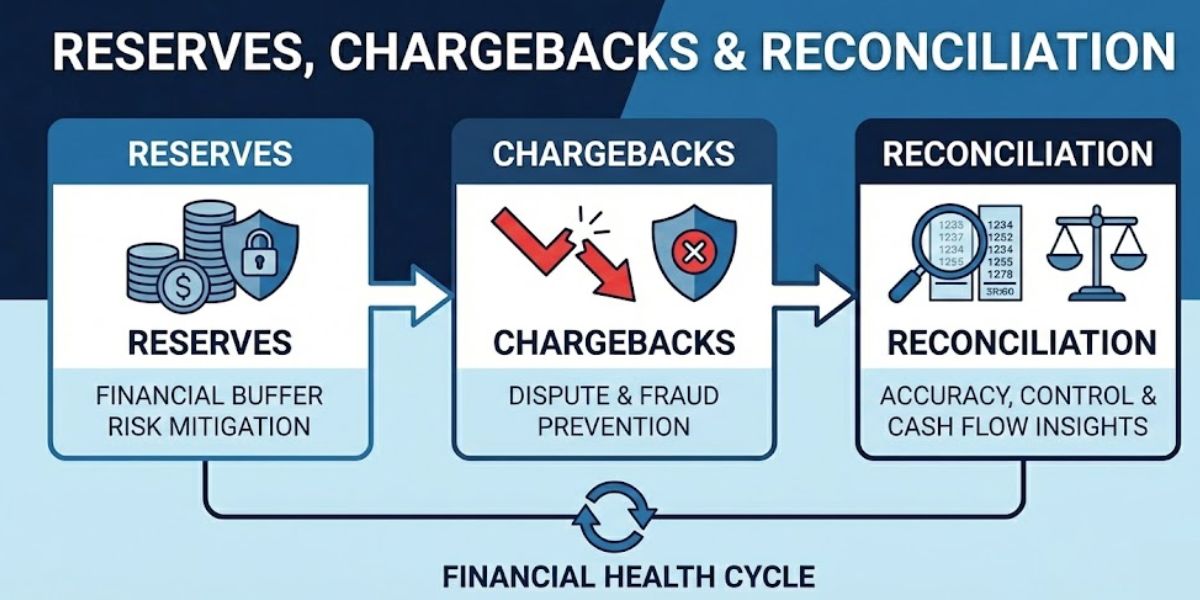
Key Takeaways:
- Reserves protect businesses by holding a portion of funds to cover chargebacks, refunds, or unexpected payment risks.
- Chargebacks impact cash flow and require strong documentation, fraud prevention, and quick resolution to avoid financial strain.
- Reconciliation ensures accuracy by matching internal records with bank and processor reports for clear financial tracking.
- In freight factoring, these principles work together to maintain steady cash flow, reduce risk, and build trust between carriers and factoring companies.
What Are Reserves?
Reserves are portions of funds that payment processors or financial institutions hold back to protect against potential losses from disputes, refunds, or fraud. They act as a financial safety net, ensuring that obligations can still be met if unexpected transaction issues arise.
In business operations, reserves provide stability by covering risks linked to chargebacks or delayed payments. They help maintain trust between merchants, processors, and financial partners by ensuring funds remain available to handle future liabilities.
What Are The Different Types Of Reserves?
There are three primary reserve structures businesses encounter. Each type serves a distinct purpose in managing financial risk and maintaining payment security.
- Rolling Reserve: A fixed percentage, commonly between 5 and 10 percent of every transaction, is held for a specific period, usually 90 to 180 days. Once this period ends, the funds are released in order, ensuring continuous protection against chargebacks and delayed payments.
- Upfront Reserve: A lump sum equal to a set percentage of the projected monthly revenue is withheld at the beginning of the processing relationship. This type of reserve is most often used for new or high-risk merchants who lack an established transaction history.
- Capped Reserve: Funds are retained until a defined threshold, such as 10 percent of the average monthly transaction volume, is reached. After the cap is met, further deductions stop, and only the excess funds are released while maintaining the capped amount.
How Do Reserves Impact Business?
- Affect Cash Flow: Reserves reduce the immediate availability of funds since a portion of revenue is held back. This limits liquidity and can impact day-to-day operational expenses or reinvestment capacity.
- Strengthen Financial Security: Holding reserves provides a safeguard against unexpected chargebacks, refunds, or client disputes. It ensures that businesses can absorb potential losses without disrupting financial stability.
- Influence Risk Perception: A business with high reserve requirements is often seen as higher risk by payment processors. Maintaining consistent performance and low dispute ratios can help reduce reserve levels over time.
- Support Long-Term Stability: Reserves act as a buffer that protects both merchants and processors from financial shocks. Over time, this stability builds stronger relationships with banks, investors, and payment partners.
What Are Chargebacks?
Chargebacks are payment reversals initiated by customers through their banks when they dispute a transaction. They serve as a consumer protection measure, ensuring that buyers can recover funds from unauthorized, incorrect, or unsatisfactory purchases.
For businesses, chargebacks represent both a financial and operational challenge. They lead to lost revenue, additional fees, and strained relationships with payment processors if not managed properly.
What Are The Common Causes Of Chargebacks?
There are six common causes for chargebacks:
- Fraudulent Transactions: Unauthorized card use by third parties.
- Customer Disputes: Dissatisfaction with product quality, non-delivery, or misrepresentation.
- Processing Errors: Duplicate charges, incorrect transaction amounts, or expired card use.
- Merchant Errors: Failure to cancel subscriptions or unprocessed refunds.
- Friendly Fraud: Legitimate customers falsely claiming they didn’t receive goods or didn’t authorize a transaction.
- Communication Failures: Poor documentation or delayed customer support responses.
Chargeback Process Explained
The chargeback process begins when a customer disputes a transaction by contacting their issuing bank. The bank then reviews the claim and temporarily reverses the payment while the investigation is underway.
Next, the merchant is notified of the dispute and must provide supporting evidence such as proof of delivery, order confirmation, or communication records. This stage determines whether the transaction was legitimate and if the customer’s claim is valid.
Finally, the bank reviews all submitted documentation and makes a final decision in favor of either the customer or the merchant. Each chargeback carries additional costs, and high dispute rates can lead to frozen accounts or increased reserve requirements.
How To Reduce Chargebacks?
- Use Authentication Tools: Verify customer identity with 3D Secure or multi-factor authentication to prevent fraudulent transactions.
- Enhance Transparency: Provide clear billing details and responsive support so customers recognize charges easily.
- Track Patterns: Monitor transaction data to detect and stop recurring fraud or dispute trends early.
- Maintain Documentation: Keep proof of delivery, receipts, and communication records to defend against disputes effectively.
- Result: Fewer chargebacks strengthen processor trust and help lower reserve requirements.
What Is Reconciliation?
Reconciliation ensures that all recorded transactions match external statements from banks or payment processors. It validates that funds received, transferred, or withheld align with accounting records. For businesses managing complex payment streams, reconciliation guarantees financial integrity.
What Are The Major Types Of Reconciliation?
Businesses perform three primary reconciliation types:
- Bank Reconciliation: Matches cash ledger entries with bank statements to identify missing or unauthorized entries.
- Processor Reconciliation: Verifies that settlement reports from processors align with internal transaction logs.
- Chargeback Reconciliation: Tracks disputed transactions, associated fees, and resolutions.
Why Does Reconciliation Matter?
Reconciliation eliminates discrepancies, ensures compliance, and improves accuracy in cash flow reporting. For businesses handling thousands of payments daily, errors can accumulate into significant financial distortions. Automated reconciliation tools reduce manual oversight and prevent misstatements in financial reports.
How Reserves, Chargebacks, And Reconciliation Interconnect?
Reserves and Chargebacks
Reserves increase when chargebacks rise, as processors hold more funds to cover potential losses. Managing chargebacks effectively helps lower reserve levels and keeps more working capital available.
Chargebacks and Reconciliation
Every chargeback changes the payment balance, making accurate reconciliation essential. Proper reconciliation ensures all disputed amounts, fees, and refunds are recorded correctly.
Reconciliation and Reserves
Timely reconciliation helps businesses track reserve releases and identify any withheld or delayed funds. This clarity improves cash flow visibility and financial planning.
Unified Financial Control
Together, these three elements create a strong financial foundation. When reserves, chargebacks, and reconciliation are managed in sync, businesses maintain stability, accuracy, and trust with payment partners.
What Are The Best Practices for Financial Stability?
Optimize Reserve Management
Businesses should negotiate reserve terms with their payment processors after maintaining a stable transaction history. Tracking reserve release schedules improves cash flow forecasting and prevents liquidity shortages.
Strengthen Chargeback Control
Merchants must use fraud prevention tools such as 3D Secure and chargeback monitoring systems to reduce dispute rates. Reviewing chargeback analytics regularly helps identify recurring issues and improve operational performance.
Enhance Reconciliation Accuracy
Companies benefit from using automated reconciliation software to align internal accounting with processor settlement reports. Maintaining clear audit trails ensures every transaction, refund, and fee is correctly recorded.
Ensure Transparent Financial Reporting
Accurate financial reporting systems provide visibility into reserves, chargebacks, and reconciled transactions. Transparency strengthens confidence among banks, investors, and financial partners.
Adopt Financial Technology Solutions
Integrating payment gateways with accounting platforms enhances real-time data accuracy and efficiency. Advanced financial automation tools reduce human error and support long-term financial stability.
Compliance and Risk Governance
- Follow Financial Regulations: Adhere to PCI DSS, AML, and GDPR standards to protect transaction data and prevent financial misconduct.
- Maintain Internal Controls: Implement clear financial policies and regular audits to ensure accountability and transparency.
- Ensure Accurate Reporting: Classify reserves as restricted assets under IFRS 7 and ASC 230 for compliant financial statements.
- Monitor Chargeback Timelines: Respond to disputes within 7–30 days as required by Visa, Mastercard, and other card networks.
- Prevent Money Laundering Risks: Verify customer identity and track transaction sources to meet AML compliance obligations.
- Protect Data Security: Use encryption and tokenization to safeguard sensitive payment information from breaches.
- Train Employees on Compliance: Educate finance and operations teams on current regulations and risk management procedures.
- Conduct Regular Risk Assessments: Review financial exposure, reserve adequacy, and dispute ratios to identify emerging risks early.
Connecting These Principles to Freight Factoring
Freight factoring depends on accurate reserves, careful chargeback handling, and precise reconciliation to keep cash flow steady. These practices help factoring companies manage payment risks and maintain strong financial relationships with carriers and shippers.
Reserves in Freight Factoring
Factoring companies usually hold back 5 to 15 percent of an invoice’s value to cover short payments or disputes. Once the shipper pays in full, those reserves are released to the carrier, protecting both sides from unexpected losses.
Chargebacks in Freight Factoring
Chargebacks happen when brokers or shippers challenge freight bills or delay payments due to damaged goods or delivery issues. Keeping clear records like rate confirmations and proof of delivery helps resolve these disputes quickly.
Reconciliation in Freight Factoring
Reconciliation makes sure every invoice, payment, and reserve aligns correctly in the books. It confirms that carriers get the right amount and that all adjustments are tracked and transparent.
Financial Strength Through Integration
When factoring companies manage reserves, chargebacks, and reconciliation together, they create a smoother and more reliable operation. This balance builds trust with carriers, speeds up funding, and keeps the business financially strong.
Conclusion
Reserves, chargebacks, and reconciliation work together to keep a business financially balanced and transparent. When these processes are managed carefully, companies can protect their cash flow, prevent unnecessary losses, and maintain trust with their financial partners.
In freight factoring, these principles become even more important for stability and growth. Strong control over reserves, clear dispute handling, and accurate reconciliation help factoring companies build long-term reliability and confidence within the transportation industry.
Leave a Reply